Web Analytics RiceHigh's Pentax Blog: My Reviews
Showing posts with label My Reviews. Show all posts

Saturday, June 12, 2021

Image Corner Blur Issue with K-3 III (Head-to-head Comparison with KP)

Have had my K-3 III for over one month now and tested it with my various DA/FA/DFA lenses (mostly primes) but there is a strange issue discovered.

It is all about the unexplainable corner (or simple off-centre) softness in the images taken with the K-3 III. To illustrate the problem, here we go with the sample set below, with a pair of images taken using my K-3 III and KP with the same lens (which is a HD-DA 40mm Limited), at almost the same time and with the same exposure parameters.

Let's see the 100% centre crops of the pair of images, which are perfect in focus. I captured also the EXIF data on screen for our easy reference (Click pictures to Enlarge):


Then, here are the left side of the images in 100% crops:


And then, here are the right side of the images in 100% crops:


This problem really drives me nuts. I really didn't expect the new flagship camera would produce much lower resolution at off-centre in images than its predecessor model of 2017. It's really much frustrating after all.

It seems that the new sensor of the K-3 III has some kinds of incompatibility with the existing Pentax lens lineup optically, which is a hardware issue but not a software one, I believe. Note that I had already turned off all the lens correction functions as well as the AA filter simulator to rule out the possibility of the issue is being caused by software or other factors.


Tuesday, June 01, 2021

Checking the DPR Claimed K-3 III "Shutter Shock" Issue

With DPR claiming that the "shutter shock" of their K-3 III under test was unavoidable by whatever means at low ISO speeds of 100 and 200 with a lower shutter speed, I have tried to resemble their test using the same ISO, time value, lens model and focal to verify the case. Here we go:


ISO100 ISO200  


So, any shake and "shutter shock" that you can see? I don't, do you? :-D And, I took my shots handheld through the finder, without any tripod but with SR turned on.

Monday, August 24, 2020

Notice: Copy and Paste of Text and and Saving of Pictures within Blog are Disabled

In order to avoid possible copyrights infringement, which I could see from my Blog log from time to time, the copy and paste of text and saving of pictures and images within my Blog are disabled, with immediate effect.

Thank you for your continuous support and happy reading and viewing! :-D

Sunday, July 26, 2020

What is the LCD Screen Size of the K-New?

Since Pentax (Ricoh) has yet not told us more specs of the K-new, in order to estimate the rear LCD screen size of the K-new, which they told us that it was "huge", I took a much similarly angled picture of my KP and then measured the dimensions of the same different parts.


In particular, I measured the dimensions of the rear wheel/dial openings, and then the diagonal lengths of the screens, calculated and got the ratio for each camera and then calculated again the ratio between the two ratios. :-)

It is found that the K-new's screen is about 1.13X diagonally larger than that of the KP. Hence, since the KP's screen is in 3 inches, it is estimated that the K-new's rear LCD screen should be in about 3.4", case closed.


Read Also:  100% Bingo! I Derived Exactly Correctly for the 645D Actual Sensor Size!

Wednesday, February 12, 2020

Measurbated: Psychological Hypothesis with Firmware Upgrade Proven :-D

Since some Pentax users suggested that new K-1 and K-1 II firmwares have improved AF, I have carried out a formal test and measurbation to find out the truth, as a renowned measurbator of camera gear, in particular, Pentax gear. :-P

My test procedures and methodology as follows:

1. A K-1 and DA50 F1.8 combo was selected and used for the test, i.e. same gear setup as claimed by one of the OPs for improved performance. ;-)

2. AF was carried out in a fairly lit room in about 300 lux, two objects were placed at about 1m and 3.5m respectively and AF was made on the two objects to and fro alternatively. This was repeated for more than ten times and the AF sound was recorded:

    (Click to Enlarge)

3. Measurbated the AF starting and completion times, right before the AF motor started to move and before the AF confirmation beep was sounded:


4. Input the times into an Excel table and calculate the AF time required (in second) for ten times of AF operations and take the average time and get the results. Here we go:


Left table contains the results with FW version 1.52 and the right one are those with FW version 1.51. Indeed, I cannot see any real and significant difference between the two. So, it's what psychological effect of people strikes again, case closed! :-D

Friday, October 21, 2016

Tuning the LCD Display of the K-1

The default LCD display settings produce too bright colours and it has a blue cast. I therefore corrected it with the following settings, after checking against my carefully calibrated professional monitor, which is calibrated internally with an external colourimeter.


I checked two units of the K-1 and found that they are more or less the same and the above settings work. See if it would work for you and produce better and more accurate results! :-)

Wednesday, May 25, 2016

DA*55 F1.4 Vs Carl Zeiss Planar 50 F1.4 Vignetting Test


https://flic.kr/s/aHskARK2YN

Sunday, May 22, 2016

My Pixel Shift Resolution Test

Below is the 200% centre crops without PSR and with. In-camera JPEG pics with firmware V1.10. Lens used is FA43 Limited at f/11, exposure 30s, ISO 100, shot with 2 sec self-timer enabled plus cable shutter release. Mirror lock up was disabled despite user manual said that it could be engaged. :-(


(Click to Enlarge)

For the resolution difference but the artifacts, I blog, you decide. :-)

Saturday, May 14, 2016

FA28 Vs DA35 Vignetting Test on K-1


https://www.flickr.com/photos/48733800@N06/albums/72157665925538734

Lens correction functions on distortion and vignetting, which are supported by the K-1 for the FA28, are disabled whilst for the DA35, it is not supported for any lens correction function in the FF mode of the K-1.

Well, how suitable are these lenses on the K-1 FF? Any how do they differ? I blog, you decide! :-)

Wednesday, May 11, 2016

My K-1 Impressions (Pure Text Quick Review)

The ergonomics of the K-1 is superb. It feels very comfortable to hold in hands and feels very solid and balanced. The overall build of the K-1 is very good, but the camera top feels a bit plasticky and hollow.

AF is really accurate, but hit rate is not 100%, sometime it missed, especially when focusing in a hurry or under low light. But when it hits, it is really accurate. Tried the three FA Limited wide opened, no problem. Tried several other A, FA, FA*, DA and DA* primes, they all focused accurately wide opened. The K-1 probably is the most accurate Pentax AFSLR ever made, since the MZ-S. I really like it! :-)

Focusing is faster and quieter than before. But the speed is not particularly fast when it is compared to other FF bodies of Canon and Nikon. Forget about focus tracking with multiple AF points for moving objects, the points are still not enough and are too much centred. There is still some room for improvement. 

Exposure accuracy is good, probably maybe a bit bright for its tendency, especially with film glass. Seems a bit more accurate with digital lenses. Nonetheless, the EV compensation is always there. It is quite easy to use with the quick function dial. I set it to +/- by default. Or, one can customise the e-dials to directly control the EV compensation.

Resolution of the images from K-1 is really superb. The per pixel sharpness is better than the Canon and Sony FF bodies that I have, even with the same lenses put on them. That's only my own subjective impression, though and no scientific measurbation has yet been made, because I am now busy with shooting with a good camera, instead of doing endless measurbation tests for faulty cameras.

Colour rendition is contemporary, which is now very Canon alike. It do taste very CMOS, the AWB is very white, maybe too white IMO than one would like to preserve the atmosphere even under the warm sunlight. But K-1 do really "catch up" with the game. ;-) I found it works best in the Natural mode, with the Saturation turned up one step.

Dynamic range is good, better than the Canon's. Noise is acceptable up to ISO 3200 and beyond that, use it unless it must be.

Lens correction now works very well. It is fast and there is no more delay as in older models, even with all the four corrected function enabled. Supported all DFA digital and FA* film lenses. DA lenses are supported in crop mode. Lens correction does not work in FF mode for DA lenses, even if they are actually FF compatible. On the other hand, for supported FF lenses, lens correction does work even when crop mode is selected.

Liveview operation is good, the liveview image will change according to the FF or crop mode selected (and of course). The LV AF is fast but unfortunate insensitive. It often missed focus with lower contrast, even under bright light situations outdoor.

There is nothing special for the video recording (movie) mode. And there is no live AF under movie mode. AF can be remeasured upon pressing of the AF button on demand by the user. It is not possible to capture any still photo during video recording.

The super articulated monitor is sturdy and easy to use, better than imagined before. Most importantly, the closed position is well aligned.

Mirror action is crisp but yet gentle, resemble the old feel of the MZ-S film flagship. The *ist D had similar feel in the mirror but however its movement is obvious too slow. Now the K-1's is quite good but I still hope that it could move faster anyway.

Viewfinder clarity is not as good as my Canon 5DIII which is brighter and clearer to see than the K-1, despite both have an overlaid LCD information display on the finder frame.

The electronic level indication is now very easy to see and follow. It is sensitive and accurate provided that you got a good copy. My first copy has good accuracy for the horizontal sensor but the vertical sensor is a little bit off.

GPS is sensitive and accurate and is very easy to turn on and off, with the dedicated button. WiFi is also easy to on and off with the special function dial. The red and blue LED indicators is a good design. However, the Ricoh Image Sync App is just a piece of junk, undoubtedly. It is difficult to use, with limited features and its operations are completely nonsense, even for the basic functions of browsing photos and for downloading.

Sunday, February 21, 2016

FA31 F1.8 Limited on 36M a7R - Test Samples with 100% Crops

Tested at f/8 and ISO100, manual peaking focusing:


Last Tested: DA*55 F1.4 on 36M a7R: Part 1 and Part 2

Monday, February 15, 2016

How a DA* Prime would Perform on the Sony 36M FF Sensor? (Cont'd)


~ f/11, 1/250s @ ISO 100, a7R + DA*55 F1.4


Sunday, February 14, 2016

How a DA* Prime would Perform on the Sony 36M FF Sensor?


Here we go, my test picture and crops tell it all:


Picture shot at around f/8, 1/320s and ISO 100 with my A7R and my DA*55 F1.4 lens put on it. MF focusing was done with focus peaking at 10X on the image centre.

100% crop of the picture centre:


100% crop of the picture corner:


More test samples would follow! :-P

Sunday, September 20, 2015

Size Comparison Again! Pentax FF Vs Canon 5D Mark III

This is what I have compared with the images got from the camerasize.com. Here we go, the Pentax FF image has been accurately resized:

Saturday, June 06, 2015

Shootout Again! 645D Vs A7R


I think I have been for long not posting shootout test and here it is, for my old cameras! ;-)

Measurbate and discover by yourself, for all the differences! Original photos are available for viewing by clicking the "Download" option per photo under album! :-D

https://www.flickr.com/photos/48733800@N06/sets/72157651768054944

EXIF data is available for all photos. Pairs of test shoots were taken at almost the same time for the same scene.

Lens used for A7R is a Canon EF35mm F2 (AE and AF adapted) and a FA645 45mm F2.8 for the 645D, for almost identical FoV.

Monday, February 17, 2014

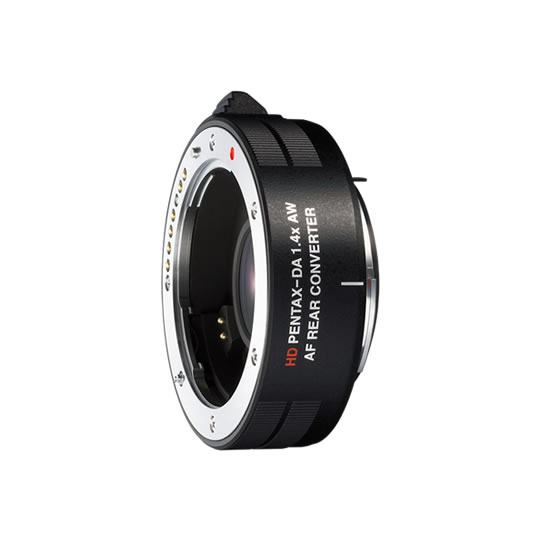
Official Information of the "New" HD DA 1.4X Teleconverter


http://www.ricoh-imaging.co.jp/japan/products/lens/k/converter/lc-1_4x-aw/

The official on-sales date in the Japanese home-market will be March 7th. A full list of compatible Pentax K-mount digial lenses is provided, note that not every DA lens of Pentax/Ricoh is compatible.

Besides, it does look very familiar for its appearance specs including the physical parameters, many things are just too close to my ancient "Tamron" Pz (Power Zoom) TC 1.4X Model MC-4 that I purchased 14 years ago, which is yet believed to be original manufactured by Kenko!

For more information of the Tamron 1.4X MC4, look here:

http://www.ebay.co.uk/itm/Tamron-F-AF-Tele-Converter-1-4X-Pz-AF-MC4-with-box-and-papers-/121171067435


Well, even the lens release lever looks exactly the same, what a "co-incidence"! :-o ;-)

But I just wonder, why it takes so long for Pentax to release such an OEM product, if it really is, which has been delayed for so many years since it was first announced back to 2008!?!

Nonetheless, my prolonged experience for that adapter is that it is great for APS-C cropped image circle but is just fair to rather mediocre optically when it works with Full Frame, no matter film or digial. Enough said! :-(

BTW, for real photo samples for how the "Tamron" 1.4X MC4 performs optically, here you will find some samples of mine:

K-5D Mark III: DA 18-55 II Converted to a 24-80 FULL FRAME Lens!

Tuesday, December 10, 2013

My A7/7R and A3000 First Hands-on Tests (with Full ISO Shootouts for the A7 and 7R)


Tested the three cameras at the Sony showroom today (the A7 and 7R are undoubtedly the most wanted-buy bodies of the year for many those old Pentaxians with film glass!), and found the following:

- A7 shutter action is smoother and faster than that of the A7R, which is terrible, i.e., loud sound, stronger vibration and longer shutter lag;

- The build quality of both cameras whilst is acceptable, but not outstanding;

- I am not convinced with the clumsy user interface and troublesome operation menu of the A7 cameras, which is really a nightmare to use! I comment this as an existing NEX user, of which the operation should be simpler, I believe! >:-(

- The slow speed 28-70 FE kit lens is cheaply built, the IQ of it is not that bad, though. Still, this lens just feels a bit large when it is mounted and thus unbalanced;

- The EVF and LCD displays have some yellow tint to my eyes. The refresh rate of those are not that good;

- AF speed is not fast, but could be acceptable to most people;

- Continuous shooting (speed) of both cameras is just a joke, I don't know what is/are the real problem(s) there. I used a Class 6 Transcend 8GB card to test;

- Exposure accuracy and metering intelligence of the cameras are good enough;

- AWB seems to do a better job than those NEX cameras;

- The IQ is the most important thing of these two bodies, two full ISO speed tests from ISO100 up to 25600 for each of the bodies are posted as follows:

http://smg.photobucket.com/user/RiceHigh/library/NEX/A7A7RA3000Tests/A7

http://smg.photobucket.com/user/RiceHigh/library/NEX/A7A7RA3000Tests/A7R

All camera settings were reset to factory defaults. Lens used for both tests was a FE 35/2.8 ZA "Zeiss" prime. Full size original sample for the same (close) test scene can be downloaded per picture page (by clicking the magnifying glass symbol twice).

Nevertheless, I have not brought any of my Pentax lenses to test further for the adoption of those lovely Pentax glass of mine on the A7 and 7R. I have no doubt about the IQ of these cameras after my above first test anyway. However, I have big reservations on quite many of the issues that I have mentioned above!

As for the A3000, whilst it is cheap enough, I think it is also close to a piece of junk in many ways, including the build and the ridiculously tiny/low resolution EVF of it. It is even stupid enough to switch between the EVF and the back LCD manually, just like what was done four years ago with the first generation added-on EVF for Pana GF1 of mine! :-o The LCD looks bad, also..


As for the IQ of the A3000, it is just so so. Noise starts to appear and could be easily seen from ISO400 and up, just see the following few full samples:

http://smg.photobucket.com/user/RiceHigh/library/NEX/A7A7RA3000Tests/A3000

Sunday, September 15, 2013

AF Fine Adjustment: "Apply All" and "Apply One" Fully Explained


Quite some time ago, I explained how to focus adjust a K-5 camera using Live View. However, there are some confusions amongst Pentax users over time for the meanings and effects of the "Apply All" and "Apply One" settings. So, I opt to explain more this time. Well, the user manual tells nothing useful about these once again, just see page 126 of the K-5 user manual! >:-(

For a camera like the K-5 and K-30/50/500 which lacks a f/2.8 sensors, this "AF Fine Adjustment" is crucial so as to compensate the spherical aberration that exists on all lenses when stopped down against wide opened, which causes the camera to mis-focus depending on the amount of differences. It is because the AF system actually measures the more central part of the lenses optically for those f/5.6 AF sensors.

So, here we go, we have four scenarios:

1. Nothing is Set:


This is essentially the same as to set in the Custom Function that the "AF Fine Adjustment" is Turned Off / Disabled.

2. "Apply All" is Set but "Apply One" Not:


So, All lenses will use the "+5" setting as shown in the above example which is obvious. Do note that a +ve setting is meant to instruct the camera to focus fronter (to compensate back focusing) and vice versa for a "-ve" value to instruct the camera to focus backwards (to compensate front focusing).

3."Apply All" is Not Set and "Apply One" is Set (for Individual Lenses):


This is also obvious, the "Apply One" setting will take effect when individual lens is mounted of which the lens identity number is detected (for a Pentax F AF lens or later). So, I now know why the official user manual just tells you "Apply All" means apply all, "Apply One" means apply one or something like that but no more! ;-p

Choose this only if your camera does not contain any AF error primitively by itself, like my own K-5 unit which is a perfect copy already! :-D

4. Both "Apply All" and "Apply One" are Set:


Well, what does it mean under this case? Is it actually +2, +5 or +7?? What do you think? :-o For what I checked, it is actually +2, that means that the "Apply One" setting overrides the "Apply All". Whilst this does make sense somehow but however, the "Apply One" is not applied on top of the "Apply All" as many Pentax users wished!

Btw, if you have a copy of your Pentax camera which needs some slight adjustment by itself for *all* lenses, i.e. sample variations with some system errors, set both and remember to individually calibrate all your lenses unless the "Apply All" already works for all your lenses, i.e. scenario #2! Frankly, if you have more prime lenses like me, calibrating each lens is inevitably unavoidable!

Last but not least, some people would be puzzled for what to do with a cheap DAL or even "DA" lenses which does not have a focusing mark (namely, the DA35/2.4, DA50/1.8 and the DA40/2.8XS lens). Well, what you need to do is to put on a sticker and make the mark yourself before doing any further calibration! See the following example. :-)


Besides, some people would still wonder, do the K-5II/s need such "AF Fine Adjustment"? My answer is Yes, if you are using really Fast Prime like the DA*55/1.4 or just an old FA50/1.4 and etc., of which spherical aberration still occurs in between the widest aperture of f/1.4 down right to the f/2.8 aperture where the AF is detected and measured. So, the above techniques do still always apply! And also don't forget that not every copy of the K-5II/s is perfectly quality controlled when it was produced from the Pentax' (and now Ricoh's) factory.