Web Analytics RiceHigh's Pentax Blog: Technical Articles
Showing posts with label Technical Articles. Show all posts

Tuesday, November 02, 2021

The K-3 III Image Corner Blur Issue Strikes Again

Camera-gear YouTuber Kobie M-C tested the K-3 and K-3 III side by side and here is his report:

https://www.youtube.com/watch?v=pH2eQD6fpA0

And, his quick textual comment follows, quoted:

"Some interesting things occurred during the shooting for this test. It seems the K-3 Mark III sensor out resolves some lenses including the DA 50 1.8 which surprised me. It's a good lens, nice and sharp, but just not on the K-3 Mark III. I tried live view, electronic shutter, Focus fine adjustments from -10 to +10 and it was still soft. F/1.8, 2.8, 4 (when the lens is sharpest) and still the same result. This might be what some professional reviewers are experiencing when they mention soft images."

The below quick snapshot refers for easy reference:

(Click to Enlarge)

In fact, Kobie's finding is exactly the same as what I found last time with my new K-3 III when it was tested against my KP side by side.

As the increase in the total number of pixels of the K-3 III against the K-3 and KP is really marginal, I think there exists another factor to cause the decrease in resolution in image corners for images produced by the K-3 III, even for the same old lenses, which used to be optically good. 

I suspect the (different) design of the micro-lenses and (different) assumed incident angle of light should come into play. Indeed, the new 26MP Sony sensor was first used in the Fujifilm X-T4 which has a much short back focal distance. Later on, Ricoh got this sensor and put it into the K-3 III. However, the new sensor is not that highly compatible with many of the old glass in optical sense, especially at the image corners and edges, and that wide angle lenses suffer more than standard and tele ones.

I have verified this with the latest glass marketed by Pentax, in particular, like the D-FA* 16-50 PLM, which shows a much lesser problem for the aforesaid issue and phenomenon. 

Related Article:

When the Sensor Outresolves the Lens

Tuesday, June 02, 2020

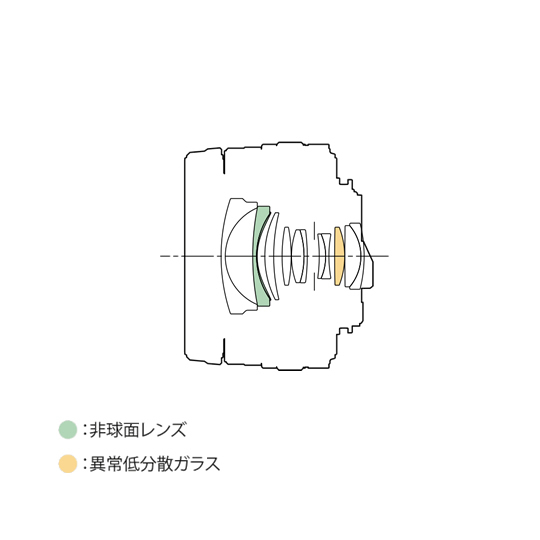
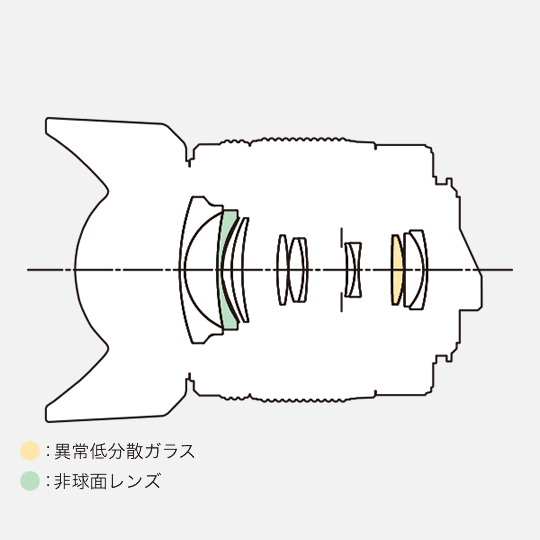
Possible New Optical Designs of the DA*16-50 F2.8 PLM


I recall the old post by the Pentax Rumors about the various new DA 16-50/2.8 lens designs and patent(s) for improved performance, one of which (amongst 10 nos.) would be selected by Pentax for this new lens. Which will they use finally? 16 elements in 13 groups (5 designs), 17 elements in 13 groups (3 designs), 15 elements in 12 groups (two designs)? We shall know by the next year of 2021. :-)


Monday, June 01, 2020

Review of 21mm Full Frame Lens Optical Designs


Pentax DA 21mm F3.2 (APS-C)

Norton 21mm F1.4

 
Skopar 21mm F4
 
 Ultron 21mm F1.8

Voigtlander 21mm F1.4

Carl Zeiss 21mm F2.8

Friday, May 29, 2020

Prediction: What New Features of the K-New Would Have?

Presuming that they have the same APS-C sensor, and then going through the specs of that Sony sensor and then the set of features of the X-T4. Here we go, for the possible new features that had never been offered by Pentax before, in their upcoming new flagship:

- 26MP BSI CMOS sensor (for its high ISO performance, this sample at ISO 10000 may shed some light)

- 18.82 fps maximum frame rate with 12-bit RAW (which will be converted to 8-bit JPEG anyway, limit of the sensor for the read-out bit-depth and rate combinations)

- If 14-bit RAW is implemented (KP and K-1/II have 14-bit RAW), the frame rate for continuous shooting still picture will be in between 6.84 (for highest 16-bit readout of the whole picture) and 18.82 (as mentioned above) - the above brief marketing sheet of the sensor does not mention about the 14-bit readout modes and rates

- 10 fps is possible (considering that the XT-4 offers 15 fps continuous shooting with mechanical shutter, unless Pentax's latest mechanical engineering plus image processing speed are yet not up to there. And, the Pentax has a mirror but the Fuji does not. )

- 425 point on-sensor phase-matching AF in Live View mode, which the X-T4 has

- 10-bit full-frame 4k video in 30p (limit of sensor) or 12-bit 2k video at high frame rates (55 to 111 fps which is the limits of the sensor); Or 10-bit 4k video at 60 fps is possible with the 1.18x crop factor of the centre

- 4:2:0 colour sub-sampling for H.264 codec (which is a bit too much for the dropping of the colour data) and 4:2:2 for H.265 (Pentax may have a different codec and implementation, though)

But since that the K-new will not have any articulated screen / flipped monitor, the video capability of it will not be too strong anyway?

Other sample images of the production X-T4 in DPR's latest full review of the camera can be found here. Also, a quick glance with the comparometer at the DPR, it seems that the ISO performance will be improved from the KP's by one to two stop(s), and which will undoubtedly exceed the IQ of the K-1 II.

Thursday, May 28, 2020

Comparing the Optics of the Contemporary Giant 85mm Lenses

1. Pentax DFA 85/1.4: 12 elements in 10 groups, 1255g (without hood), 82mm filter thread


2. Canon RF 85/1.2: 12 elements in 10 groups, 1195g, 82mm thread


3. Sigma Art 85/1.4: 14 elements in 12 groups, 1130g, 86mm thread


4. Zeiss Otus 85/1..4: 11 elements in 9 groups, 1200g, 86mm thread 


Well, whilst the new Pentax is similar to the Zeiss in design (but with one additional element), it wins in weight amongst the four, which is actually the heaviest 85mm prime ever made on Earth. Good! ;-P

Wednesday, May 27, 2020

Trick: Installing Pentax Digital Camera Utility Without the Software CD

Step 1: Find an USB drive;

Step 2: Download the Digital Camera Utility "software updater" from the below official link:

http://www.ricoh-imaging.co.jp/english/support/digital/dc_utility5_win.html

Step 3: Copy and save the file to the root of the USB drive;

Step 4: Rename the Label of the USB drive to S-SW140;

Step 5: Click and open the Zip file, choose the 32-bit or 64-bit folder and execute the Setup;

Step 6: Install the program as if it is just a normal Setup ad complete the installation in a moment.

I hope this trick helps and could be useful to any Pentax user just in case.

Monday, April 27, 2020

D FA 70-210 Had a Different Focusing Mechanism than the Original Tamron?

A Chinese full review on the lens reveals that the Pentax had a different focusing mechanism/method than the original Tamron SP lens, although the optical formula of the both lenses are the same. See the following official diagrams for the difference:


The Red Japanese words on the highlighted part just mean "focusing elements". The reviewer also writes that he tested the AF speed of the two lenses on the same objects and found that the AF of the Pentax lens was actually a tad faster. He hence suspected that it is owing to the less lens elements being moved for the AF with the Pentax lens. Note that the bodies used for the comparison test were a K-1 II and a Canon 5D III.

However, maybe owing to this change, it is also found that the Pentax lens however is less sharp when wide opened at both the wide and tele ends, which is not a good sign anyway, as image quality is affected. But it is also mentioned that the Pentax could be sharper when stopped down, on the other hand.

Nonetheless, the Pentax lens has much better coating than the Tamron, see this side-by-side comparison:


For the rest of his findings, just go read yourself. Note that Google translation is not working well as all the linked test pictures will become broken, anyway.

Wednesday, July 06, 2016

Who killed the Infinity Focus?

http://www.bhphotovideo.com/explora/photography/features/who-killed-infinity-focus%3F

Good article! Btw, I found that most of my FA primes have a precise infinity hard stop at the infinity mark of the lenses when mounted on my K-1 and I am pleased.

Friday, October 16, 2015

HD/DA18-50 and DA18-55 are Having the Same Optical Formula


So, they are the same optically, but only the allowable zoom ranges are different.

Friday, December 19, 2014

Polish Optyczne Fully Tested the K-s1

http://www.optyczne.pl/289.1-Test_aparatu-Pentax_K-S1_Wst%C4%99p.html
(in Polish)

Seems not bad IQ, but does it really have market? What's special actually? Flashy LEDs?? :-o

Friday, October 11, 2013

Worth Re-posting: How Meaningful is a 24MP APS-C Sensor?

http://ricehigh.blogspot.com/2011/08/when-sensor-outresolves-lens-how.html

Tuesday, September 24, 2013

Removing AA Filters is a Mistake for the Industry, Said IR

http://www.imaging-resource.com/PRODS/olympus-e-m1/olympus-e-m1A.HTM

Via Image Sensors World

Quoted:-

"Low-pass filters, the lack thereof, and moiré

There's been a strong move in the camera industry lately to remove low-pass filters (aka anti-aliasing filters or LPFs) from cameras, in pursuit of greater image sharpness. The Olympus OM-D E-M1 is one of the latest camera models to join this trend.

At IR, we feel strongly that eliminating low-pass filters is a bad idea, and a mistake for the industry. While the vast majority of natural subjects aren't subject to aliasing and moiré issues, many man-made objects have the sort of regular patterns that trigger the problem.

The real problem is that once you've got moiré or color aliasing in your images, it can be very difficult, if not impossible, to remove."

"As noted above, these examples don't point a finger at Olympus alone: The same or worse can be found in the output from virtually any high-end camera built without an LPF."

They have their daily life example images to prove that they are right. Of course, as the most basic thing for digital sampling, the Nyquist theorem should NOT be violated!

Monday, September 16, 2013

Lead Glass and Lead-free Glass for Photographic Lenses

I agree that these are long reads but really interesting:

http://optics.org/indepth/2/7/3

http://rohs.exemptions.oeko.info/fileadmin/user_upload/Stakeholder_comments/Exemption_13_several_industry-stakeholders_27_March_2008.pdf

Via: http://www.dpreview.com/forums/post/52159193

In short, lead-containing glass is still better optically, less temperature sensitive, more stable and actually cheaper to make. The use of lead in some optical appliances is actually exempted by RoHS directive but the adoption of lead-free glass in photographic lenses is yet the trend and the future of the industry.

Btw, I am glad that I still have some of those toxic Pentax glass that are lead-made, including some of the best F, F*, FA* and FA Limited lenses, which are now used on my Canon 5D3 FF, examples here and here! :-D

Wednesday, September 11, 2013

My Best Optimal Custom Image (Colour) Setting Combination for the Later Pentax Digital Bodies

Well, here it is:


The above was first tested out with my K-5, of which the hue output was always not correct for most of my Pentax digital lenses for all of the built-in custom image profiles, even for the Natural profile, which was supposed to be colour accurate. So, I sat down to think what's wrong and observed quite some of my old photos made with the K-5..

My conclusion was that green colours are lacking yellow. Skin tones are lacking red, orange colours could contain more red. Thus and therefore I made the above hue shift. Btw, the most unfortunate thing is that no official documentation could ever tell the user what are the actual effect and meaning for changing this setting! >:-o Nonetheless, one drawback of the above is Blue colours now contain more green, thus they could be more cyanish. But the factory defaults are too blueish for many things anyway!

Still, two obvious problems with the Natural mode is the lower contrast and saturation for most lenses and shooting situations and thus I bumped up both for 1 step. As for the sharpness, I found that the standard Sharpening method (parameter set) is yet the best and 1 step up will make the JPEG directly out of camera to be more usable, while balancing well with both sharpening artifacts and noise.

On the other hand, I noticed that some Pentax users said that the K-5 series bodies are a bit cool for the AWB. But actually I don't find the same. The AWB is accurate but the problem primitively lies with the wrong hue shift. In order to verify this, just set the camera in preset white balance in particular the daylight WB and then shoot under sunlight, this can be proven and confirmed, example test here. For instance, that is something like what they set:


So, the ABOVE is NOT recommended! The incorrect hue shift will not be completed corrected but yet new yellow cast will be introduced for quite some situations. After all, my recommendation is to leave the AWB at default settings, ONLY changing the colour profile is needed and will work.

With the same optimal colour profile used with my K-5, I put it into my Q and it still works like a charm! :-D


After all, I would not post any of my sample images this time. Just try it out yourself to see if it is better or much better and things have actually improved! :-) And, I am always happy to share even everything could just be "useless as usual", as what my haters and fanboys said! ;-p

Wednesday, August 21, 2013

(Different) Optical Constructions of the Four DA18-55 Zoom Lenses

Source: http://forum.xitek.com/thread-866434-1-1-1.html (in Simplified Chinese)

1. Original DA18-55 - 12 Elements in 9 Groups, One Aspherical Element:


2. DA18-55II - 11 Elements in 8 Groups, One ED (Extra Low Dispersion) Element:


3. DA18-55WR - 11 Elements in 8 Groups, One Aspherical Element and One ED Element:


4. DAL18-55 - 11 Elements in 8 Groups, No Aspherical nor ED Element of Any:


After all, it seems that the optical formula and construction of the DA18-55WR should be the best. On the other hand, the optical design of the DAL18-55 is a cutting corner one, which should perform worst. Not even to mention about the cutting corner build of the DAL, which adopts a plastic mount and the quick shift focus mechanism is removed altogether.


Read Also:-

Standard Zoom Mega Shootout! (DA Vs FAJ Vs DAL Vs SA Vs FA!)

K-5D Mark III: DA 18-55 II Converted to a 24-80 FULL FRAME Lens!

Monday, August 05, 2013

Pentax' Optical Design Copied Leica's?

First, this is the Leica Tri-Elmar 28-35-50mm F4 Wide "Zoom", at 28mm:


And then, this is the Pentax FA20-35mm F4 Ultra Wide Zoom:


And then, compare the above two and then also against the Leica Summilux 21mm Prime below:


Via: http://www.dchome.net/forum.php?mod=viewthread&tid=1215807
(in Chinese)

It is not difficult to notice that, as the OP has pointed out, the optical designs of the three lenses are quite similar, especially for the Tri-Elmar and the FA20-35. So, who copied whose optical design? :-o

I have also checked the optical formula of the DA21 F3.2 Limited lens, it can be seen that the optical design could still be similar, although it is somehow simpilfied:


(Diagram Source: http://kmp.bdimitrov.de/lenses/primes/ultra-wide/DA21f3.2.html)

Nonetheless, as Pentaxians, we are of course glad to learn that we have Leica's optical formula embedded right inside our Pentax glass! So, Pentax could really be the poor men's Leica! ;-D

Saturday, June 01, 2013

Copy 120 Films Using an ILDC/DSLR with a Macro Lens

First inspired by Petapixel, this is what I have tried and done myself:-

1. These are the tools that I've used: A white fluorescent desklamp at 6000K, two 77mm UV multi-coated filters, a lens hood with outer diameter in 77mm, some "white" milky transparent paper:-


2. Turn on the lamp, mine is a Panasonic with invertor circuitry which enables the lamp operated at a high frequency:-


3. Put on the "diffuser", I have made three folds of the same plastic sheet:-


* Do the custom white balance at this point with your camera. Mine was measured to be at 4600K exactly, after adding the diffuser, which is yet somehow yellowish.

4. The 120 film is then put inside the two filters, which are in the same size of 77mm. The film fits just well with that filter size. The two filters are screwed tight and the film is sandwished inside (although it is not completely flat, though, but the final DoF should be enough to cover this unevenness):-


5. Align at the position and then put on the lens hood with proper length, so as to match the magnification of the whole film frame to fit in the digital image frame and size of the camera:-


6. Find a wide angle macro lens. I am using the Sony E30/3.5 Macro on a NEX. Experiment with the subject to camera distance. I found and added another lens hood so as to make it just right for the image magnification:-


7. Take the photo with steady hands. It is preferable that everything can be screwed together although my above setup doesn't. Adhesive tape may help but I did the following unfixed. Here is the raw result:-


(Above: Pentax 645N with FA645 45mm/2.8, Fuji Provia 100F. For original picture with full EXIF, click and download here. Warning: Large File!)

8. Crop the photo and here is a clean and "complete" scan of the film:-


(For original picture with full EXIF, click and download here. Warning: Large File!)

9. If you want to compare the result for a scan from a lab machine, here is what I got from the lab which scanned my film after the film development:-


(For original photo with full EXIF, click and download here. Warning: Very Large File!)

10. The above lab scan is in 17MPs originally and mine is less than 14MPs for what my NEX could deliver (as after cropping it is less). You may note some vignetting is introduced in my "scan" as my NEX is an old model which could not correct lens vignetting in-camera. But the advantage of scanning the film by oneself is that more things can be adjusted/controlled including the White Balance, Contrast and Colour Profile and etc., which is important IMO. Also, to get the best results, a higher pixel count camera with better image quality should be used and do shoot in RAW mode, which will give you the flexibility of further post-processing for higher image quality and better results.

Monday, April 29, 2013

What is/are the Meaning(s) of a Cropped Digital System Now?

In a recent interview with the Pentax Ricoh China Japanese Head, it was told that the 645D was just a completely different product than the 135 FF Nikon D800E, which is far more differentiated.

However, this reminds me of the fact that the 645D, like all other K-mount Pentax DSLRs, is actually also cropped for its sensor. So, I just wonder, how is the 645D different from those 135 FF DSLRs and how "large" is the difference? And besides, what are the trade-offs?

Here we go, for the factual data:-
CameraSensor (Film) TypeSensor (Film) Size (in mm x mm)Diagonal Length (in mm)Crop Factor ACrop Factor BCrop Factor C
645 Film12056 x 41.569.71X *0.79X0.62X
645DCropped 12044 x 33551.27X1X *0.79X
D800/E13536 x 2443.31.61X1.27X1X *
K-5II/sAPS-C
(Cropped 135)
23.7 x 15.728.42.45X1.94X1.52X
* Reference

Is everything much clearer now? The myth has been resolved!

In fact, the 645D is the "APS-H" of the original 120 film with a crop factor of nearly 1.3X. The same applies when the 135 FF is compared to the 645D, which has the exact crop factor in 1.27X. So, how much advantage does it give?

And, *suppose* that there is a Full Frame 645D which exists, the 135 FF will then become a 1.6X "Canon APS-C" cropped machine in comparison, then this difference would be more significant!

On the other hand, the truly APS-C sized K-5IIs for its sensor, when compared to the 645D, is really sympathetic! It is almost in 2X, just like when the micro-4/3 sensors are compared to the 135 FF. Actually, the APS-C sensor is much smaller than the 135 FF, its total area of the sensor is just only in 43%!

Well, what are also in return with that cropped sensor in the old 645 form factor for the 645D then? A big, heavy, slow but rather expensive camera, but which is actually NOT having a significantly larger sensor, and thus no big edge in IQ as a result!

Indeed, cropping an old sensor/mount format is always stupid in the digital era, unless new lenses with a smaller image circle which fits more tightly into that smaller image sensor are re-designed and made!

This is the end of case and the case is closed! The 645D now is a meaningless offer after all! If Pentax is listening, please give us Full Frame DSLR bodies soonest, no matter for the K or 645 mounts!! >:-(


Related:-

Search Articles about "Sensor Size" in this Blog

Thursday, January 31, 2013

New Product Photos of the AF360FGZII Flash and the Q Body Cap Pinhole Lens


Via: http://www.pentax.jp/japan/news/announce/20130130.html
(in Japanese)

Note that the body cap pinhole lens is NOT a REAL Pinhole lens as there is glass/optics inside the hole! It is because owing to the really small-sized sensor of the Q, it is not possible to make a small enough hole to produce a sharp enough image but at the same time to observe the diffraction limit before everything is yet blurred much again! :-o

Last time I tried, I made a pinhole K-mount body cap lens myself, see the photos below:-


And it works, which will give you toy like images that a classical pinhole (film) camera could give! Life is easier with DSLR, though, as I did always set to ISO 1600 or above when used with my pinhole lens, on my K-x! >:-(