Web Analytics RiceHigh's Pentax Blog: K-m
Showing posts with label K-m. Show all posts

Wednesday, August 29, 2012

What is This Smaller Camera?


(Click to Enlarge)

This picture has just been uploaded at an old thread at the Russian Pentax forum back to May, in an updated/edited post today.

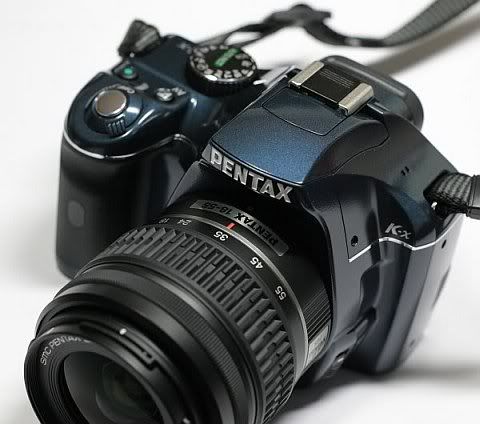
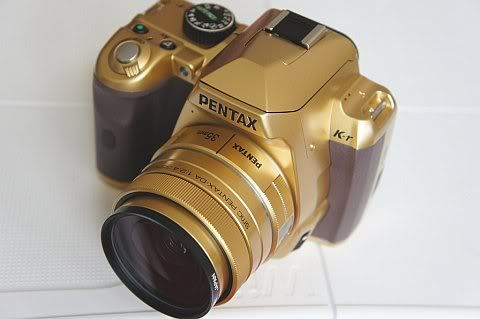
So, what is that smaller camera? Is it just a blurred K-x/K-m? Or, the K-300?! :-o

Monday, February 13, 2012

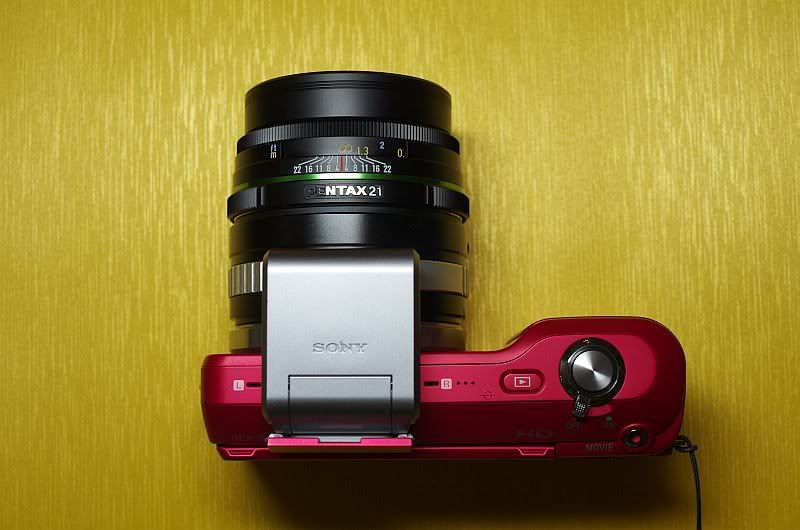
The "Ideal" K-mount Mirrorless

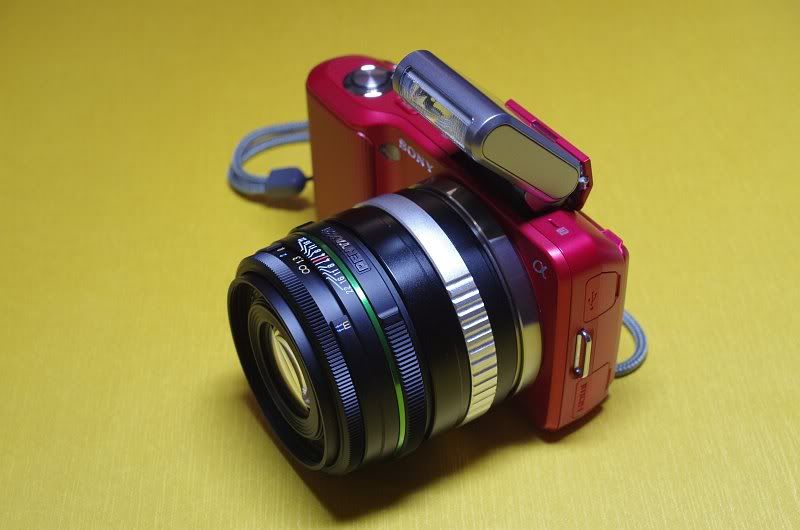
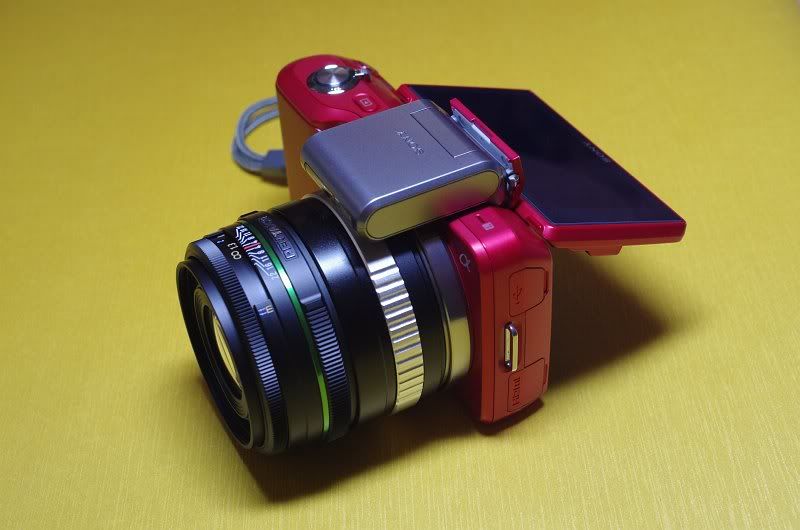
Well, I named mine as the RH-01, which has the following appearance and features! ;-D


(The backdrop is close to the main body colour of the Yellow K-01! I think if I had it, it could look slimmer when put onto that as part of the thick body could be hidden! ;-D)

1. It has a thin and small body!

2. It has an articulated monitor!

3. It has an aperture control ring! That's called the "Hyper Operation" in Pentax terminology! In addition, the aperture can be changed at anytime during video recording!! It also had the H.264 MP4 compressed video in 30 frames (long time ago!) that some Pentax fans has *suddenly* raved about! ;->

4. It weights far less than the K-01! :-o The above combo with a *Pentax K-mount* pancake lens is only at 540g, with flash, battery and memory card plus a light handstrap, too. In fact, the above lens weighs 140g by itself, leaving the body alone weighs only at 400g, which is yet ready to shoot. And, if I used a cheaper adaptor, I can save 30g more!

5. The match is with better outlook and more balanced with all those elegant DA limited pancakes rather than a thin lens on a thick bricky body! >:-(

After all, I am keeping my K-x, same as the K-m, which are yet the smallest and lightest Pentax DSLR bodies and most importantly, they are equipped with a *viewfinder*, if they are meant to be made bigger!


Related:-

The Half-Baked K-mount Mirrorless! >:-(

Size and Weight Comparison for the K-01 (Against K-5, K-r and K-x)

K-01 Poll 1/2: Do You Like about the Design Appearance of the K-01?

K-01 Poll 2/2: How Do You Think about the Practicality of the K-01?

Thursday, January 12, 2012

Pentax SLR Cameras 1952-2011


(Updated: Click Above to Download a Larger Poster!)

Source: Pentax Germany @ Google Plus

Via: Chassimages Pentax Forum

Btw, does it have a larger version? :-(


Read Also:-

A (Pentax) Camera Catalogue Collector

Pentax SLR Cameras 1952-2008

Major Canon Cameras 1930 to 2010

Thursday, December 01, 2011

Sensor Used in the K-r and K-x (Sony IMX021 APS-C CMOS)


First of all, let's look at the original official product press release:-

http://www.sony.co.jp/SonyInfo/News/Press/200708/07-072/index.html
(in Japanese, Excite English Translation Here)

With a 12-channel output architecture, the IMX021 has a maximum frame throughput rate of 10.39 frames per second at full image resolution in 12 bits. So, the K-r has a maximum frame rate of 6 fps for maximum resolution JPEG (which is converted from 12-bit RAW sensor data down to 8 bits per colour channel of the JPEG format) which has not yet fully utilised the full potential of the sensor indeed. Of course, the bottle-neck for this maximum camera shooting rate is not at the sensor anymore.

Other feature of the sensor is a built-in programmable amplifier up to a maximum gain of 24dB. The rated output voltage (sensitivity) of the sensor (at f/5.6 with yellow light source of green colour signal) is in 500mV (or 0.5V, average figure) and the maximum saturated voltage is 1100mV (or 1.1V, minimum figure). If this is compared to the specs of the ancient 10MP CCD sensor ICX493 used in the K10D/K200D/K-m, it could be noted the improvement is not by that much indeed as whilst the IMX021 has slightly better sensitivity (so that there will be slightly less noise owing to less amplification required), the saturation level per pixel is close and similar. As such, it should say that actually the IMX021 is even more vulnerable to suffer from charge overflow which will result in highlight clipping of the pixels and then in the final image. But of course, the better image processing technologies and techniques of the later could always help, so as to compensate for this deficiency and to produce better results ultimately.

Besides, it is interesting to see that the initial set selling price, back to 2007 when it was first announced, of the IMX021 was in 40,000 Japanese Yens, which roughly equalled to be about US$400 by that time. Indeed, it was surely not cheap for the total cost of an entry-level DSLR body. I still remember that when I bought my K-x almost two years ago, it costed me for something just more than US$600. So, the profit margin by the camera manufacturer was really not that much, even though the price of the sensor could have been dropped and that in volume order that it could be cheaper.

For more details about the sensor, here is the product catalogue in pdf:-

http://www.sony.co.jp/Products/SC-HP/cx_pal/vol74/pdf/imx021.pdf

Unfortunately, the catalogue does not contain more information on the video recording part but only mentions once that the sensor supports it. Otherwise, I shall see if it is possible to record 1080p video like what older Canon APS-C CMOS sensor could actually do!


Related:-


Myth? CCD Has Better IQ Than CMOS? (A K-m Vs K-x Shootout and Riddle)

The Secrets of the K10D (Part 1 of 3) - The Heart: CCD Imager

K-r and K-x are Much Different!

Heart of the Pentax Q - Sony IMX078CQK Imager

Inside the Nikon D7000: The K-5 Sensor is There! ;-)

Wednesday, November 30, 2011

Supported Pentax DSLR Functions with Different Pentax Lenses

Read this question at the PF and I was surprised to see the reply by the site owner Adam (i.e., the first reply to the OP), which shows that Adam completely lacks the basic user/operation knowledge in using older manual (aperture) Pentax lenses on any Pentax DSLR! :-o

Maybe Adam has been given too many of the latest Pentax lenses (for "reviewing" or whatsoever) so that he has almost forgotten how older Pentax manual lenses would behave on all the Pentax digital bodies. Nevermind, I think it's my take now! Below are two summaries that I compile to let all my readers here know (or got refreshed for the knowledge if already known) about the basic technical features or limitations of our Pentax lenses back to the 60s of the last century and what they could or could not do for us with our Pentax DSLR bodies! :-)

N.B. I don't think that you can find ALL of the information below in any of the Pentax DSLR/lens user/operation manuals! ;-D


Table 1: Lens Data/Function Availability with different Pentax Lenses

Lens Data and/or Function
Provision Means
M42
K/M
_A_
_F_
_FA_
FAJ/
DA/
DAL
DFA
(1st
Gen.)
DFA
(2nd
Gen.)
Wide-opened Metering
Instant Return Aperture Coupler-
Y
Y
Y
Y
Y
Y
Y
Number of Steps Stopped-down (via Aperture Ring)
Mechanical Position Indicator-
Y
Y
Y
Y
-
Y
-
Maximum Aperture
Array of Electrical Contacts
-
-
Y
Y
Y
Y
Y
Y
Minimum ApertureArray of Electrical Contacts-
-
Y
Y
Y
Y
Y
Y
Focal Length
(Advanced/Serial) Electronic Communication
-
-
-
Y
Y
Y
Y
Y
Focus Distance
Electronic Communication-
-
-
Y
Y
Y
Y
Y
Lens IDElectronic Communication-
-
-
Y
Y
Y
Y
Y
MTF Data
Electronic Communication-
-
-
-
Y
Y
Y
Y
Powered/Auto Zoom
Electronic Communication and KAF2 Power Contacts
-
-
-
-
S*
-
-
-
In-lens AF (SDM or DC Motor)
Electronic Communication and KAF2 Power Contacts-
-
-
-
-
S
-
-

Legend: Y= Yes/Available; "-" = No/Not Available; S = Supported depending on Lens Model (if Feature is Available)


*Remark: Limited/Partial Function - Only Auto Zoom Retract and Powered Zoom are Supported.


Table 2: Pentax DSLR Camera Function Availability with different Pentax Lenses

Body Function
M42
K/M
_A_
_F_
_FA_
FAJ/
DA/
DAL
DFA
(1st
Gen.)
DFA
(2nd
Gen.)
*Remark
Wide-opened Metering
-
-*
Y
Y
Y
Y
Y
Y
Stopped-down metering is available with a push of button.
Multi-segment Metering
-
-
Y*
Y
Y
Y
Y
Y
Not as accurate as subject distance information is Not available (and hence is not included in the calculation).
Off-the-film TTL Flash Auto (*ist D and DS/DS2 Only)
Y
Y
Y
Y
Y
Y
Y
Y
TTL flash sensor underneath mirror is installed; No Pre-flash is required.
Off-the-film TTL Flash Auto (All Others)
-
-
-
-
-
-
-
-
No TTL flash sensor underneath mirror; P-TTL is mandatory for Auto Flash.
P-TTL
(where P stands for Pre-flash)
-
-
Y*
Y
Y
Y
Y
Y
Not as accurate as subject distance information is Not available.
AF
-
-
-
Y
Y
Y
Y
Y
-
Lens Correction on Image
-
-
-
-
-/Y*
Y
Y
Y
Only the three FA Limited are Supported.

Legend: Y= Yes/Available; "-" = No/Not Available


Okay, is it and everything much clearer now? :-> And no need to make thanks to me, thank Adam instead! ;-p After all, I just won't make any reply over his premise to help others (and actually help him to make more money!) anymore (although Adam is really "kind" enough for not banning me!), as I decided and told two-and-a-half year ago! :-D


Further/Reference Read:-

K-Mount Metering and Exposure Bases - A Technical Brief

Related:-

Two Important Custom Functions for Proper Metering

Modding a Rikenon-P 50/1.7 Into an "A" Lens! :-o

Ten Things that I Want Ricoh to Do for Pentax

Hypocrites of the PentaxForums and Their Lies

Updating of my Blog Editing Direction

Wednesday, November 09, 2011

New Lithium Rechargable Battery Type in AA Format - LiFePO4

Thanks to Blog reader Hayami, I've got known to this "new" battery type and product.

This new rechargeable Lithium technology is different from the conventional Lithium-ion or polymer ones, the native voltage is at about 3.45V and with a nominal rated voltage at 3.2V after some use. This voltage is actually very close to the added up voltage of two fresh disposable AA alkaline or lithium batteries. It is called the Lithium Iron Phosphate, or LiFePO4 in chemical term:-

http://en.wikipedia.org/wiki/Lithium_iron_phosphate


(Source: Chinese ZOL Forum)

As we can see from the above Wiki article, LiFePO4 does have many advantages over the other conventional Lithium rechargeable technologies. Yet, it shares the advantages of other lithium rechargeables such as no memory effect and a very low self-discharge rate.

Unlike the conventional Lithium rechargeables, no external voltage regulation is required to match the "1.5V" (x2) voltage requirement, which makes now it is possible to make AA sized battery in which including such a voltage regulation circuitry is almost impractical.

As for the internal resistance of the LiFePO4, it is less than 100 mOhm as specified, which is close to the rated 90 to 150 mOhm of the Energizer disposable AA Lithium L91. But however, since we use four ("1.5V") L91 in our Pentax AA DSLRs whilst only two are needed for the LiFePO4 (with two other dummy battery conductors to be inserted in series and used in conjunction), the total battery internal resistance is halved in comparison, as a result. This is considered still much relatively safer to use the NiZn rechargeable AA as its internal resistance is only at about 5 mOhm per battery unit only, which is considered just too low and too dangerous, as it might cause damage to device depending on the design of its circuitry.

And, here is an article which shows the inside of a charger product that is widely available at Taobao (aka the Chinese e-Bay). It seems that the charger is well made with good materials used and workmanship. The charger is manufactured by a Hong Kong vendor with factory in the mainland China btw.


The LiFePO4 charger is also available in USB format, by a different Chinese manufacturer, though:-


(Source: http://www.qqid.com/jk/shop_view.asp?id=158)

Nevertheless, one of the least drawbacks of the current LiFePO4 AA in the market is about its lower rated capacity in mAh, which is at 600 only. But with its superior voltage regulation throughout its whole discharge curve, it has been widely reported that the battery performance and life is still superior than all those NiMH rechargeables which are rated at 2,000mAH+ something, for most cases. Below is one set of the tested discharge characteristics for two different samples as posted:-


(Credit: http://www.920pk.com/shangpin_7291871215.htm)

After all, my set of 4 LiFePO4 AA batteries (with 4 dummy AA conductors) will arrive very soon. I will test it more thoroughly this week and shall write an user report/review of mine later on. But as you can see in all the above Chinese web-links, most of the user comments are very favourable and positive, with various different kinds of devices used, including DSLRs, DCs, torches and RC toys. Besides using that in my K-x, I am eager to try that in my Tayami QuickDrive (QD) toy racing car and see how faster my car could get with the increased power but yet far less weight that put inside for the batteries! :-D


Related:-

K-x Battery Issue Re-visited (with the Latest Firmware)

Better K-x Rechargable Solution? Is the NiZn Safe?

AA Battery Chargers Fully Compared (4 Models)

Overclocking Your Pentax (AA Battery) DSLR(s)!?

Six Years of AA Battery Pentax DSLRs

When 1100mAh Li-ion RCR-V3s Outperform 2500mAh+ NiMH AAs ..

Tuesday, October 18, 2011

What Will be My 10th/Next DSLR/ILDC Body?

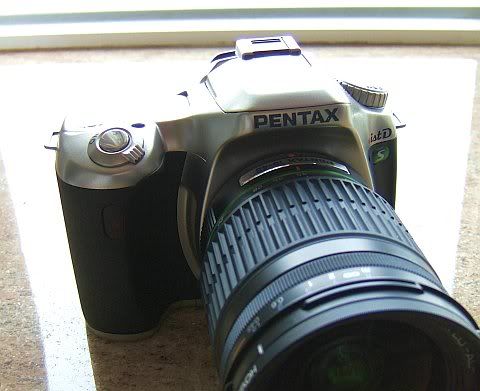
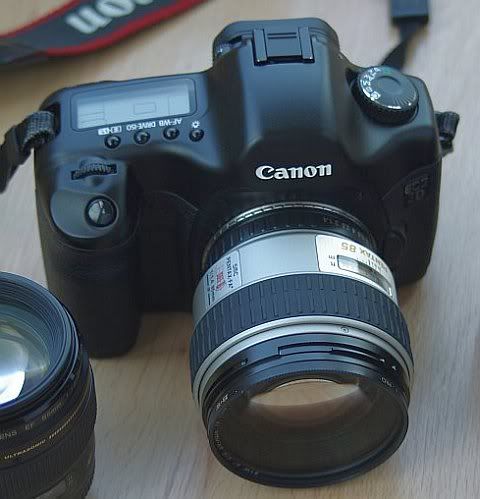
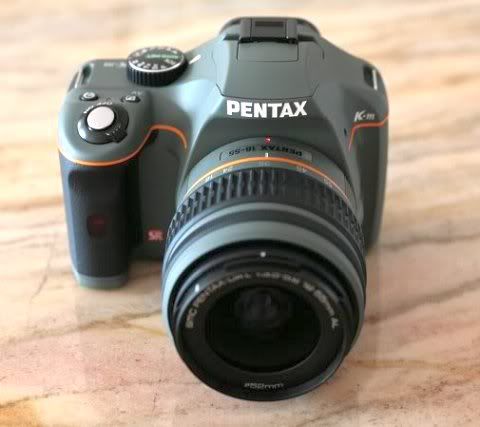
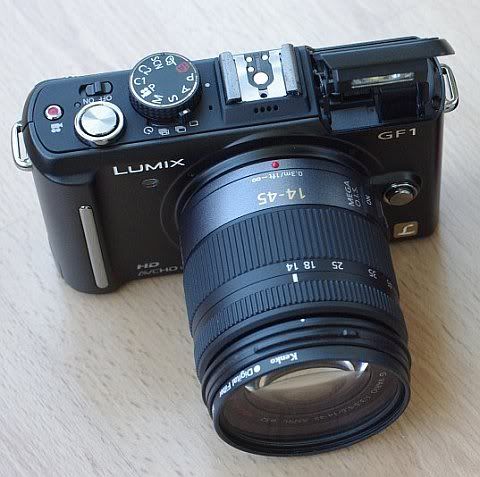
Since January 2004, I have purchased nine DSLR and ILDC bodies. Below is the history and summary:-

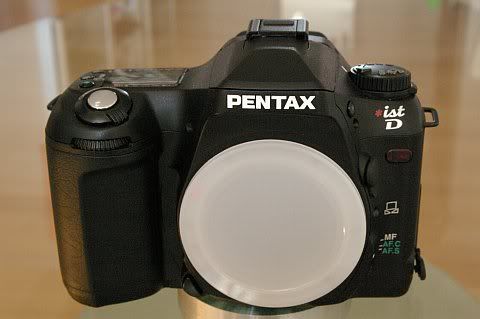
2004: Pentax *ist D
2005: Pentax *ist DS
2006: Pentax K100D
2007: Canon EOS 5D
2009: Pentax K-m, Panasonic GF-1 (K-7 pre-order was cancelled, deposit refunded)
2010: Pentax K-x, Sony NEX-3
2011: Pentax K-r (K-5 pre-order was cancelled, deposit refunded)

And, some photos of my gear:-


So, what will be my next body? NEX-7/5N? The rumoured Canon 5D III? Or, the Pentax Q (Just!)? :-o Which one? Actually, I just don't know it myself, as I really don't have a crystal ball to tell! ;->

Besides, it is interesting to note that my Canon Full Frame 5D is the only digital camera body that could stop me from buying yet another new camera for two years long, "momentarily"!~ Indeed, no other body could "achieve" that so far! ;-p

Btw, I actually pre-ordered the K-7 back to 2009 at least one month before it was announced and also for the K-5 earlier this year with about 10% deposit money paid. But however, owing to various (unsatisfactory) performance and/or quality issues with the camera and bodies I received, I felt obliged to cancel both orders and opted to wait for the "next"! >:-( So, if I could "successfully" acquire them, I should already have had 11 digital bodies up till now, instead of 9 only. Nevertheless, do note that most of them are still Pentax ones, after all! :-o


Related:-

My 7th Pentax SLR Body?

The World First / Pentax First: My (Obsolete) Pentax Collection

Summary Matrix for Equipment Tests and Reviews

Ten Things that I Want Ricoh to Do for Pentax

Saturday, September 10, 2011

ISO Measurbation: Q Vs K-r Vs K-x Vs K-m (Full Size Originals)

New Q ISO test:-

http://www.flickr.com/photos/11899953@N02/sets/72157627629309900/

By Devorama, on the same target and under the same lighting condition as the previous ISO tests of his on the K-r, K-x and the K-m. And yes, this guy seems to be a die-hard Pentax supporter, he bought every Pentax new (entry) model at the very first time (and actually I also bought the K-r, K-x and K-m, but not (yet?) the Q).

Below are my previous reports on his other ISO tests, you can open other samples of the other Pentax DSLR bodies to compare and measurable endlessly:-

http://ricehigh.blogspot.com/2009/10/k-x-vs-k-m-k2000-iso-measurbation.html

http://ricehigh.blogspot.com/2010/10/k-r-vs-k-x-iso-measurbations-head-to.html

Nevertheless, do note about the brief remark on the DR and exposure accuracy/latitude of the Q by the tester, quoted:-

"Some JPGs show highlight clipping even though the camera did not indicate this would happen. Perhapds the RAW file would not have clipped."

It seems that that highlight clipping problem, which is common for those small sensor DCs, also occurs for the Q.

Besides, speaking of the Q first test, Ned Bunnell, the Pentax USA President, has posted his first impressions and several lots of sample pictures at his now not-so-regularly updated blog, see:-

http://nedbunnell.posterous.com/q-samples-post-1

http://nedbunnell.posterous.com/q-samples-post-2

http://nedbunnell.posterous.com/q-samples-post-3

Take a look, the samples are not bad, but as Ned has honestly remarked, he is biased and has a stance (obviously). But actually I believe that he knows well how to use gear, and get most out of it. And he is humble enough not to tell the world about his talent of this! :-)

Tuesday, September 06, 2011

Sensor Stains, Pentax' Fault? (Coz K-7 is Also the Same!)

See what Peter Zheng has lately found and reported:-

http://tech.groups.yahoo.com/group/ricehigh_pentax/message/937

Reports from K-7 users about sensor stains with photos clearly showing those are posted. And yes, the symptom is exactly the same as the previous K-5's.So, it is almost safe to conclude that it's Pentax' AA filter that causes the problem!


(Source Thread: http://bbs.kakaku.com/bbs/K0000036023/SortID=9944776/#9953651)

After all, the AA filter simply would change in state over time and it is generally guessed that the larger amount of heat from the sensor unit melts the AA filter and thus causing the visible stains. That could explain why the less-hot Pentax models like K-r, K-x and K-m have never had that problem reported. But, at the end of the day, the BIG question is that: Will the next Pentax Flagship have the same persistent problem? Or, will Pentax simply NOT install any AA filter like what they have already done to the Q? That would be the safest "solution" to the issue? Right? ;-)

Monday, August 01, 2011

Microsoft Camera Codec Pack for Windows 7 and Vista

Is now available for download and supports the RAW files (PEF only) of various Pentax DSLRs from *ist D to K-x (and for many cameras of other brands as well):-

http://www.microsoft.com/download/en/details.aspx?id=26829

Go get it for the update if you are using Win7 or Vista (SP2 only) and you just want to have a quick preview of your RAW pictures at the Windows Explorer. Enjoy!

Btw, the latest Pentax K-5 and K-r are not officially supported, though. And neither the 645D is mentioned.

On the other hand, Pentax has their own RAW codec that supports K-5, K-r and 645D, but than all the 64-bit Windwows are not supported:-

http://www.pentax.jp/english/support/digital/rawcodec_win.html

Thursday, July 21, 2011

Pentax K Series Ranks Below Average in a Recent DSLR User Satisfaction Survey by J.D. Power


"A study conducted by market research firm J.D. Power and Associates has found that “Nikon Pro Series” DSLRs rank highest in customer satisfaction. The company surveyed 4,500 verified online DSLR buyers to find out their satisfaction across five factors: image quality, durability, features, ease of use, and responsiveness."

From: http://www.petapixel.com/2011/07/19/nikon-ranks-highest-in-online-customer-satisfaction-among-dslr-buyers/

Via: http://forums.dpreview.com/forums/readflat.asp?forum=1036&thread=38944858


Actually, Pentax K ranks No. 5 amongst 7 with a "just-failed" mark of 883 below the passing mark of 887. Nevertheless, the K is still ahead of the Canon Rebel as well as the Sony A, which is ranked last.

Sunday, June 05, 2011

Excellent AA Battery Review by Type

Written by the Photo Rumors:-

http://photorumors.com/2011/06/04/what-are-the-best-aa-batteries-for-photography/

I think this detailed review is really a good read.


Related:-

AA Battery Chargers Fully Compared (4 Models)

How to Resolve the K-x Battery Problem?

Better K-x Rechargable Solution? Is the NiZn Safe?

Thursday, May 19, 2011

Latest DxOMark Lens Test Results for the DA35/2.4

On a K-5..:-

http://dxomark.com/index.php/Lens-with-Camera/All-tested-lenses/Pentax/smc-DA-35mm-F2.4-AL/%28camera%29/676/%28cameraname%29/Pentax-K5

Other test data are also available for the same lens when putting on other Pentax bodies, for example, here is a comparison amongst K-5, K-m and the K20D with the DA35/2.4, actually in descending order for the overall DxO Lens Score, i.e., with the K-m, the combo performs better than with the K20D!

If you want to compare the DA35/2.4 lens to other 35mm focal lenses of other brands on other DSLRs, there is always the DxO comparison tool for the measurbation. Below is an example for K-5+DA35/2.4 Vs Nikon D5000+DX35/1.8G Vs Sony A550+A35/1.4G:-

Happy measurbation and *endless* "comparison"! Good luck! ;-D


Other DA35/2.4 Reviews/Tests:-

http://www.google.com/search?q=DA35+2.4+Tests&btnG=Find&domains=ricehigh.blogspot.com&sitesearch=ricehigh.blogspot.com

Wednesday, May 04, 2011

DIY Cable Switch/Release for Pentax K-m, K-x and K-r


http://forums.dpreview.com/forums/readflat.asp?forum=1036&thread=38349139

Clever design and nice DIY!

Anyway, unless you need the cable switch for specific applications, e.g., shooting of fireworks or etc., the IR remote switch should be adequate for normal uses.


Related:-

The Pentax (Electronic) Cable Switches

Friday, April 08, 2011

Myth? CCD Has Better IQ Than CMOS? (A K-m Vs K-x Shootout and Riddle)


This test and "riddle" is really interesting. All four pairs of shots are taken side-by-side near the same time with the same lens with "identical" in-camera setting and Lightroom converted with the same parameters from RAW..

http://forum.xitek.com/showthread.php?threadid=808611
(in Simplified Chinese, Google English Translation Here)

The two Pentax DSLRs under test and comparison are the K-m and the K-x, which uses a 10MP CCD and a 12MP CMOS imager respectively. There are four pairs of shots, downsized and also provided with a cropped pair for each set. The order for using the cameras would not be the same for all the four sets.

How to measurbate and play the game, then? First, you should (be able to) spot the difference(s), if any. Next, you need to judge which pictures are better (if you think so). Finally, you need to decide which picture is produced by which camera per picture set! :-o :-D

Go inspect and see if you could spot the difference(s) and see if you will be correct or not! Your take now!


The answer can be found at the Post #76 down here. But in order not to spoil the fun, you are much encouraged to try your best to see and judge before reading the answer! :-)


Read Also:-

Summary Matrix for Equipment Tests and Reviews (Not further updated anymore! :-()

Monday, March 14, 2011

Lowlight AF Accuracy Shootout: K-5 Firmware 1.03 Vs the Old K20D


http://www.pentaxforums.com/forums/pentax-k-5-forum/136324-k-5-1-03-versus-k20d-auto-focus-tests.html

The results are self-explanatory. Testing conditions including lens in used and the lighting level is stated clearly below each pair of the comparison test pictures.

It can be seen that the old K20D K.O. the K-5 with the latest "improved low light AF accuracy" firmware 1.03 hands down! :-o

It seems that Pentax has gone back to the old *ist D days for poor AF accuracy with their latest SAFOX IX/+ used in the K-r and K-5, although in speed the new 9th generation of the Pentax system seems to be faster! >:-(

Nevertheless, a few other K-5 users have carried out some random ad-hoc checks on the AF accuracy of their K-5 units at lower light. It seems that some improvements over the old firmwares are shown but I can still see some OOF samples:-

http://forums.dpreview.com/forums/readflat.asp?forum=1036&thread=37937710

So, the quick conclusion is that the new K-5 firmware could improve something but if it is compared to some old Pentax DSLRs like the K20D, the AF accuracy of the K-5 still, sucks.

My personal experience is that my K-m has the best AF accuracy, which has a mature SAFOX VIII. In fact, I found that the AF accuracy of the K-x had deteriorated but just have never imagined that the K-r could be even worse! Too bad!


Related:-

"Hysteria"!

Improved AF Accuracy of the K20D

AF Speed Difference of K-m Vs K20D

K-x' Time Longevity on AF Accuracy

K-r's AF Accuracy Affected Much by Colour Temparture of the Light Source

Magnified AF Errors of the SAFOX IX than the SAFOX VIII

Tuesday, March 01, 2011

New Version of the PK Tether is Out


http://www.pktether.com/new-version-0-4-5

What's New:-

Release version 0.4.5 PK_Tether – changes:

- added drive mode changing
- added white balance changing
- added flash mode and compensation changing
- added extended ISO detecting
- added zoom functionality
- added support for k-m/k2000 and maybe Samsung GX10
- reworked user interface
- fixed bugs

If you really need such a tethering software, which Pentax had dropped the support of the "Remote Assistant" software since the *ist Dx days, this one is for you. At least it will work with the K-x and the K-m, possibly with the K10D/GX-10 also.

Update (3-3): In the main page of the PK Tether, it is now told that it supports Pentax K-x, K-7, K-5, K-r, K20D, K10D and K200D.


Previous Related:-

Tethering Software for the K-x (3rd Party Freeware)

Tethering the Current Pentax DSLRs?

Saturday, February 05, 2011

SAFOX IX Tungsten/Yellow Light Front Focus Issue Fully Investigated

Background

Since K-r and K-5 have been marketed, many Pentax users have been complaining about the obvious Front Focus (FF) issue resulted when using these cameras, when they were shooting at lower light and more so under tungsten light source, actually. A recent report here.

In fact, this "Yellow Light FF Symptom" was with Pentax users for long since Pentax made their first DSLR, the *ist D. But I did find that the problem was not as severe as before since Pentax had made the K-m and with the two successive models of the K-7 and K-x, too. But rather unfortunately, with the K-r, it seems that this issue strikes again and more of those adverse reports arose, which was also confirmed shortly after a few days use of my new K-r! :-(

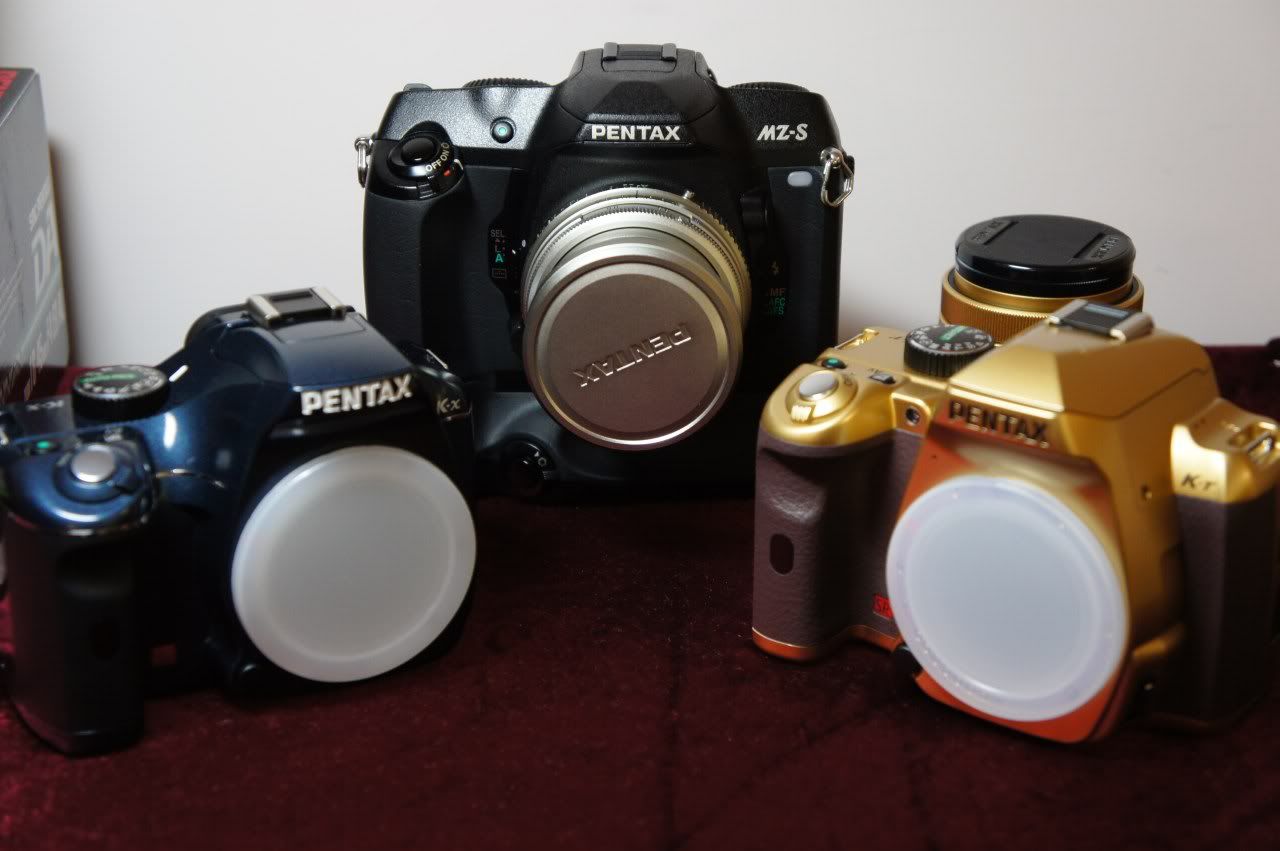
So, I decided to do yet another controlled experiment, to compare the old SAFOX VII of my MZ-S, the SAFOX VIII (latest version) of my K-x and the SAFOX IX (first version) of the K-r:-


Test Methodology

1. The focus target is as below. It comprises of a stair case of 3 flat surfaces. The centre one is the main target, which has a good contrasty pattern, and is used for the AF, with the central single focus point of the cameras, in AF-S mode.


2. Each of the camera body is then mounted on a sturdy tripod. The light source is changed between Yellow and White, photos are taken and then where the final focus arrives in the final image per picture is observed. The lens focus/distance scale for the final focus measure is also recorded, for each picture.

3. The shutter release button is re-pressed for a few times until there is no re-focusing/hunting and that the camera believes firmly that its decided AF focus is correct.

4. Other testing notes and conditions: FA 43/1.9 Limited in Av mode at f/2.0, ISO 200, SR off, AF Single, Central AF point, AWB, latest firmware in K-r and last latest firmware in K-x.

The Results

Camera
Recorded Image
Lens' Distance
MZ-S / White Light Source
N/A

MZ-S / Yellow Light Source
N/A

K-x / White Light

K-x / Yellow Light
K-r (AF Fine Adj Off) / White Light
K-r (AF Fine Adj Off) / Yellow Light
K-r (AF Fine Adj On, at Max. Value of -10) / White Light

K-r (AF Fine Adj On, at Max. Value of -10) / Yellow Light

Observations and Conclusions

1. Both K-x and K-r (*without* focus adjust) are fairly accurate with white light source.

2. Under yellow light source, the K-x focus shifts forward and too with the K-r. But the span of the shift of the K-x is considerably less than that of the K-r. As a result, the K-x' picture is still somehow acceptable even it is front focused. On the other hand, the K-r picture under yellow light is totally out of focus for the target owing to the serious front focusing. This is verified from the lens' focus scale readings in the above the four respective pictures, too.

3. With focus adjust at -10 for the K-r, now it focuses more correctly under yellow light, but then it then causes obvious back focusing in white light. Again, the span between white and yellow light is large, although it is not as large as when the focus adjust is off.

4. The MZ-S / SAFOX VII is affected least by the yellow light with minimal effect. By looking at the focus scale, it matches well with the best focus pictures under white light for the K-x and K-r.

Afterall, how does that ten years old SAFOX VII still outperform both the last version of SAFOX VIII and now the latest SAFOX of IX (but which is now the worst!)? How come Pentax yet once again has sucked quality from the SAFOX IX, which they had already improved it to avoid the problem somehow with the latest revision of the SAFOX VIII?? :-o

And since I purchased the K-r to upgrade but not downgrade, its more serious yellow light FF symptom than the K-x really upset me. And this is for sure a big disappointment - I did not expect the K-r could be and should be worse than the K-x! >:-[

Remedials, then?

1. Use the LiveView to focus, the LV CDAF is not affected by the yellow light, last time I checked and verified. But with LV, of course it has its problem and limitations, such as no OVF could be used and the prolonged shutter lag (the shutter will be fired twice before a picture is taken).

2. Manually change the focus adjust setting each time for Yellow or White light source (do remember to set the memory function for the last accessed menu item to avoid more troubles if you do this! And do remember to check frequently to avoid "user error"!!).

But of course, the pre-requisite for you for doing this is that you must first have an accurate K-r in AF which requires no -ve focus adjust by default in the very beginning, just like mine. Otherwise, you will never be able to enter the required amount of (the -ve) correction if you have already used up some of the quota, just in case - which could happen with the "excellent" QC of Pentax nowadays.


Read Also:-

How AF Errors Can Decrease *Effective* Resolution?

Friday, January 28, 2011

K-r AF Point (Mode) Selection Firmware Bug

Soon I'd powered up my new K-r Limited, I could see now there was the red AF point illumination indication again. But when I wanted to change the AF point mode via the main status menu with the Ok button, it had no effect! :-o :-(

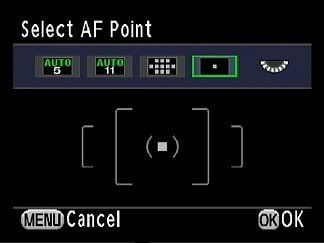
If you are not sure about what I am talking about, look at the following diagrams. Left is the main status menu, upon the press of the Ok button, it should change to the selection menu as in the right:-


I then safely concluded that it was just a firmware bug! To verify it, I picked out my K-x to check but there was not the same problem found!!

I just couldn't believe there would be such an obvious bug in the "production" firmware. I thought that this trivial bug should have been removed "silently" with the latest firmware. So, I immediately downloaded the latest K-r firmware 1.01, which has just been officially released, at the Pentax Japanese support site. But it doesn't work out at all, i.e., the bug is still there! >:-(

I think I shall soon write an email to Hoya via their Japanese email contact to report this bug. Otherwise, I am afraid that this annoying bug will never be cured, just like what happened to the K-m for its sensor cleaning bug, which is indeed a serious one (which erases all user settings) and in fact affects every K-m user!

At the end of the day, K-r is an "improved" version of the K-x with the AF red dot indication which is all about the selection of the AF point. But now that direct and quick access to the AF point mode is jeopardised and the Ok button has NO function against what is indicated in the status screen! So? :-o
Nevertheless, I bet that Hoya Japan will continue to ignore me all in all even I once contact them again. So, if you are a K-r user, DO report this bug to your local Pentax and hopefully when more users have reported, Hoya Japan would be pushed to debug the firmware and give us a new update - Yes, hopefully! Let's ACT NOW!!

Update (1-29):-

I checked last night against my K-x for the existing differences and think about the root cause of them. It was found that it is just all about the way how the cameras (K-r and K-x) are differed when they are used to choose the AF point *manually* under the "Select" mode.

Anyhow, it is confirmed that it is not a bug. But it is really way misleading to show the icons and layout (of the four-way plus Ok buttons) but which the Ok button now has no function of any except in the Select mode and it cannot be used to change the AF point mode, unlike it used to be in the K-x.

My suggestion is even now the Select mode is using the Ok button, why not re-activate the Ok button again for other modes, namely, single central AF point, Auto 5 points and Auto 11 points. Just in case if the "Select" focus point mode is entered, the user could still enter the Info or main menu to change back the setting, as of it is now - end of story. If the user does not use the Select mode usually, this will improve the operation a lot!

And, as for Hoya, they have not responded so far, and I bet they never will! >:-| This is against what most other companies I have ever sent in an enquiry, suggestion or bug report. They usually responded and appreciated much the valuable feedback from the customer, and politely! Pentax/Hoya is the rare company that I have ever seen who had such a poor attitude, and it has never been changed! >>:-\