A Hong Kong Pentax user has acquired a new K20D at the street of Hong Kong and he has immediately carried out a quick test for checking the image quality and camera performance (variations) at all different ISO speeds and here is his post:-
http://www.dchome.net/viewthread.php?tid=470500&extra=page%3D1&page=5
(Text in Traditional Chinese, use Babelfish to translate if needed. Btw, the captions in the posted test images are self-explanatory and are in English.)
The first thing to note is that the K20D image starts to appear grainy/noisy at ISO 800 and in my opinion ISO 1600 is already very marginally usable. But if you compare the K10D images which are shot at the same time for the same object with the same setup, the ISO 400 image is somewhat more or less the same as the ISO 800 image of the K20D, which means that there is a considerably obvious improvement in the noise performance of the K20D when it is compared to the K10D, especially considering that it has nearly 50% more pixels than the K10D. Having said that, it should be noted that the ISO 400 noise performance of the K10D is in fact sub-par, which is also quite some K10D users and I have been talking about for a while now.
The second thing is that the user reported that the (Auto) White Balance is far more accurate than the K10D, even under tungsten lighting. The reproduced color balance is more faithful to the original subjects as he could see so far (way better than the K10D, as reported). Well, it might be that it is really true or it is just that he is still enjoying his honey moon period with his new toy, anyway.
But the third thing which I can observe is the dark and gloomy pictures, which actually nearly becomes an unshakeable symbol or even icon for Pentax DSLRs, *can* *still* be seen. The K20D pictures look just a little bit brighter, though (but it still looks dark, muddy and dull).
Last but not least, since he purchased his K20D body (only) at near HK$11,000 (about US$1,400), which I would consider simply too expensive to consider objectively as the much more stronger (in specifications) and faster (for its true camera performance, e.g., AF and shutter lag, etc.) Nikon D300 is also selling just at a price which is dearer by very little bucks.
Do note that Nikon's system is undoubtedly more comprehensive and complete than the Pentax's one and Nikon's flash system is renowned to be the most accurate and versatile one, too, whereas Pentax's P-TTL has been reported from time to time rather frequently on the Internet for its inaccuracy and inconsistency. Although the K20D can be different but I have no high hope as long as exposure accuracy department is concerned for the Pentax DSLRs, judging from the past experiences of the Pentax DSLR users (and now the new samples published by the beta and production K20D so far). Besides, as long as the AF system of the K20D is yet the SAFOX VIII (at least as it is called), which is infamous for unsatisfactory low light performance and accuracy, I don't think choosing the K20D is a wise choice when one can actually get a far superior and better Nikon D300 at nearly the same price.
In fact, I have just tried a D300 yesterday (not at shop, one of my friends has purchased his new D300 so that I could try it out at the field), the mirror action is so gentle but yet crisp and I am really amazed with its lightning fast short shutter lag which is noticeably even shorter than my Canon 5D (around 78 ms as measured by CAPA Japan and the Imaging Resource, best timing) which is again noticeably faster than my MZ-S (which is again just faster than *any* Pentax AF DSLRs ever made!). So, I just wonder except the old Pentax DSLR user base who are particularly eager to replace their old Pentax DSLRs (which the users might be rather unsatisfied with something), for those who are new, WHO will really choose the K20D in view of the comparatively poorer price/performance ratio? So, here is my bet: Unless the price of the K20D goes down significantly, the product and Pentax won't succeed. Or, people just go to get the Samsung GX-20 which should be (much?) cheaper and with the original SilkyPix RAW software package (and better user interface than the Pentax Photo Lab), too.
Sunday, February 24, 2008
Saturday, February 16, 2008
First K20D Production Camera Formal Test
PopPhoto has completed testing a production unit (yes, they mention it is!) of the K20D and the full test report has been published:-
http://www.popphoto.com/cameras/5112/camera-test-pentax-k20d.html
So, for such a formal test, of course our main concern is on the various measurement results which are obtained under their controlled lab environment, in their professionally set-up lab. Here is the direct link to the K20D lab test results page:-
http://www.popphoto.com/cameras/5112/camera-test-pentax-k20d-rugged-body-smart-controls-page3.html
In order to make the obtained results more meaningful, we need to interpret the results by comparing the results of other DSLRs in the "same class", i.e., the targeted market segment. As the K20D is priced somewhere near the Canon 40D, Nikon D300 and the Sony A700 (said also in the PopPhoto's article) and all are the latest offers from the four brands, it's just trivial and fair enough to compare them.
Specifications wise, putting aside the old 16-segment multi-pattern metering system in the K20D (which has the least number of segments in the industry) and that all other DSLRs has a more sophisticated AF system on paper, the K20D do have a similar specification close to the 40D and the D300.
In order to do a more systematic comparison, we need to have more controlled tested data of the other DSLRs above. Very fortunately, PopPhoto have already tested all of them in their previous issues, the direct links of the corresponding results pages are as follows:-
Canon 40D:
http://www.popphoto.com/cameras/4668/camera-test-canon-eos-40d-specifications-certified-test-results-page3.html
Nikon D300:
http://www.popphoto.com/cameras/4911/camera-test-nikon-d300-vital-statistics-test-results-page3.html
Sony A700:
http://www.popphoto.com/cameras/4724/camera-test-sony-alpha-700-vital-statistics-page3.html
Now, we can go on to compare the results aspect by aspect. I summarise the key performance aspect results above in the following tables for easy reading and our quick comparison:-
Table 1:- Noise
As we can see, noise wise the K20D is just loser here. At lower ISO speeds, it by no means can match the 40D and the D300 for their superior noise performance. At higher ISO speeds, it just always loses, even to the Sony A700 (which also loses to the Canon and Nikon).
Table 2:- AF Speed (in Second)
* Update (Feb 23): The timing figures are actually K10D ones and I have also corrected the figures above as PopPhoto have already updated their chart in the K20D test report. In conjunction, I have also made two minor changes in the second paragraph below accordingly. For more about the story, see the post made by Jack (the PopPhoto forum adminstrator) in the thread below:-
http://forums.popphoto.com/camera/board/message?board.id=11&thread.id=16705
Their main argument for using the K10D data is just that as far as they learnt from Pentax, the K10D and K20D share the same AF system and in order to avoid further "confusion", they opted to publish the K10D timing results after carried out some tests for verification. Anyway, I myself am not convinced with this "reasoning", though.
Well, as many of the Pentax DSLR users, especially for those who have compared their DSLRs of other brands side by side when they were using their Pentax DSLRs at lower light environments (including me), the lower light AF performance is just pathetic for *any* Pentax DSLRs, the K20D is of no exception, as it has been verified from the above same lab environment, again.
It should be noted that at EV -1, the K20D was simply nearly unable to focus at a rather lengthy time of 2.33s which is in fact impractical to use for the AF. Actually, no other DSLRs would ever require more than 1.37s to focus even at EV -2 and EV -3 where at such a dim lighting level there is simply no figure obtainable for the K20D as it is very probably that the K20D had given up already to do the AF job at EV -2.
Not even to say actually the AF systems of Canon, Nikon and Sony all are designed to have the f/2.8 AF sensors which cater for faster lenses for better AF accuracy when used with those lenses, mostly primes, which Pentax simply lacks such a design.
Table 3:- Other Measurements
The K20D seems to have high resolution on a par with the D300. However, at higher ISO, it fails to keep the high resolution figures which the D300 has been able to maintain. But since the K20D has more pixels than the D300, the results are somehow unexpected.
As for the color accuracy, the 40D and D300 both do better than the K20D whilst the A700 is worst.
However, for the preservation of highlight and shadows details (also commonly referred to the Dynamic Range or simply DR), the K20D comes last. The K20D has the most accurate contrast, though. Do note that normally a lower contrast would normally result for a wider DR. It is therefore the Nikon and the Sony should have the potential to yield an even wider DR range if the contrast is tuned down a bit.
Table 4:- Overall Image Quality (IQ) Grading
Well, I think the last grading is redundant, after we have gone through the results of all the above key performance aspects measured. :-)
Anyway, after reading all these, there is yet only one question comes into my mind: Could and should Pentax do better? Could they?? Actually, I really just start to puzzle.. ( but I still know that *Pentax* MZ cameras' AF are better - at least faster at low light! :-( )
http://www.popphoto.com/cameras/5112/camera-test-pentax-k20d.html
So, for such a formal test, of course our main concern is on the various measurement results which are obtained under their controlled lab environment, in their professionally set-up lab. Here is the direct link to the K20D lab test results page:-
http://www.popphoto.com/cameras/5112/camera-test-pentax-k20d-rugged-body-smart-controls-page3.html
In order to make the obtained results more meaningful, we need to interpret the results by comparing the results of other DSLRs in the "same class", i.e., the targeted market segment. As the K20D is priced somewhere near the Canon 40D, Nikon D300 and the Sony A700 (said also in the PopPhoto's article) and all are the latest offers from the four brands, it's just trivial and fair enough to compare them.
Specifications wise, putting aside the old 16-segment multi-pattern metering system in the K20D (which has the least number of segments in the industry) and that all other DSLRs has a more sophisticated AF system on paper, the K20D do have a similar specification close to the 40D and the D300.
In order to do a more systematic comparison, we need to have more controlled tested data of the other DSLRs above. Very fortunately, PopPhoto have already tested all of them in their previous issues, the direct links of the corresponding results pages are as follows:-
Canon 40D:
http://www.popphoto.com/cameras/4668/camera-test-canon-eos-40d-specifications-certified-test-results-page3.html
Nikon D300:
http://www.popphoto.com/cameras/4911/camera-test-nikon-d300-vital-statistics-test-results-page3.html
Sony A700:
http://www.popphoto.com/cameras/4724/camera-test-sony-alpha-700-vital-statistics-page3.html
Now, we can go on to compare the results aspect by aspect. I summarise the key performance aspect results above in the following tables for easy reading and our quick comparison:-
Table 1:- Noise
| Camera | ISO 100 | 200 | 400 | 800 | 1600 | 3200 | 6400 |
| Pentax K20D | 1.22 (Very Low) | 1.49 (Very Low) | 1.76 (Low) | 1.64 (Low) | 2.6 (Moderate) | 3.8 (Unaccepatable) | 6.04 (Unaccepatable) |
| Canon 40D | 0.8 (Extremely Low) | 0.95 (Extremely Low) | 1.15 (Very Low) | 1.49 (Very Low) | 2.0 (Moderately Low) | 2.9 (Moderate) | N/A |
| Nikon D300 | N/A | 1.1 (Extremely Low) | 1.2 (Very Low) | 1.1 (Extremely Low) | 1.4 (Very Low) | 1.95 (Low) | 2.83 (Moderate) |
| Sony A700 | 1.25 (Very Low) | 1.3 (Very Low) | 1.6 (Low) | 1.7 (Low) | 2.5 (Moderate) | 2.7 (Moderate) | 3.1 (Unaccepatable) |
As we can see, noise wise the K20D is just loser here. At lower ISO speeds, it by no means can match the 40D and the D300 for their superior noise performance. At higher ISO speeds, it just always loses, even to the Sony A700 (which also loses to the Canon and Nikon).
Table 2:- AF Speed (in Second)
| Camera | EV 12 (at ISO 100) | 10 | 8 | 6 | 4 | 2 | 1 | 0 | -1 | -2 | -3 |
| Pentax K20D* | 0.37 | 0.44 | 0.43 | 0.54 | 0.97 | 1.17 | 1.22 | 1.67 | 2.33 | - | - |
| Canon 40D | 0.38 | 0.40 | 0.46 | 0.49 | 0.54 | 0.58 | 0.61 | 0.84 | 0.98 | 1.20 | - |
| Nikon D300 | 0.32 | 0.33 | 0.41 | 0.51 | 0.67 | 0.78 | 0.90 | 0.93 | 0.95 | 0.98 | - |
| Sony A700 | 0.24 | 0.25 | 0.31 | 0.36 | 0.36 | 0.89 | 0.85 | 1.18 | 1.16 | - | 1.37 |
* Update (Feb 23): The timing figures are actually K10D ones and I have also corrected the figures above as PopPhoto have already updated their chart in the K20D test report. In conjunction, I have also made two minor changes in the second paragraph below accordingly. For more about the story, see the post made by Jack (the PopPhoto forum adminstrator) in the thread below:-
http://forums.popphoto.com/camera/board/message?board.id=11&thread.id=16705
Their main argument for using the K10D data is just that as far as they learnt from Pentax, the K10D and K20D share the same AF system and in order to avoid further "confusion", they opted to publish the K10D timing results after carried out some tests for verification. Anyway, I myself am not convinced with this "reasoning", though.
Well, as many of the Pentax DSLR users, especially for those who have compared their DSLRs of other brands side by side when they were using their Pentax DSLRs at lower light environments (including me), the lower light AF performance is just pathetic for *any* Pentax DSLRs, the K20D is of no exception, as it has been verified from the above same lab environment, again.
It should be noted that at EV -1, the K20D was simply nearly unable to focus at a rather lengthy time of 2.33s which is in fact impractical to use for the AF. Actually, no other DSLRs would ever require more than 1.37s to focus even at EV -2 and EV -3 where at such a dim lighting level there is simply no figure obtainable for the K20D as it is very probably that the K20D had given up already to do the AF job at EV -2.
Not even to say actually the AF systems of Canon, Nikon and Sony all are designed to have the f/2.8 AF sensors which cater for faster lenses for better AF accuracy when used with those lenses, mostly primes, which Pentax simply lacks such a design.
Table 3:- Other Measurements
| Camera | Resolution (lines) | Color Accuracy (Average Delta E) | Highlight/Shadow Details | Contrast |
| Pentax K20D | 2350 at ISO 100-400 | 7.98 (Excellent) | High | Normal |
| Canon 40D | 2100 at ISO 100-1600 | 7.7 (Excellent) | Very High | Slightly Low |
| Nikon D300 | 2350 at ISO 200-6400 | 7.19 (Excellent) | Extremely High | Slightly High |
| Sony A700 | 2280 at ISO 100 | 8.9 (Extremely High) | Very High | Slightly High |
The K20D seems to have high resolution on a par with the D300. However, at higher ISO, it fails to keep the high resolution figures which the D300 has been able to maintain. But since the K20D has more pixels than the D300, the results are somehow unexpected.
As for the color accuracy, the 40D and D300 both do better than the K20D whilst the A700 is worst.
However, for the preservation of highlight and shadows details (also commonly referred to the Dynamic Range or simply DR), the K20D comes last. The K20D has the most accurate contrast, though. Do note that normally a lower contrast would normally result for a wider DR. It is therefore the Nikon and the Sony should have the potential to yield an even wider DR range if the contrast is tuned down a bit.
Table 4:- Overall Image Quality (IQ) Grading
| Camera | IQ at ISO 100 | IQ at ISO 200-800 | IQ at 1600 | IQ at 3200 | IQ at 6400 |
| Pentax K20D | Excellent | Excellent | Excellent | Extremely High | Not Rated |
| Canon 40D | Excellent | Excellent | Excellent | Extremely High | Not Applicable |
| Nikon D300 | Not Applicable | Excellent | Excellent | Excellent | Extremely High |
| Sony A700 | Excellent | Excellent | Extremely High | Extremely High | Not Applicable |
Well, I think the last grading is redundant, after we have gone through the results of all the above key performance aspects measured. :-)
Anyway, after reading all these, there is yet only one question comes into my mind: Could and should Pentax do better? Could they?? Actually, I really just start to puzzle.. ( but I still know that *Pentax* MZ cameras' AF are better - at least faster at low light! :-( )
Thursday, January 31, 2008
Some More Dubai Images ;-)
Having seen a few of the Dubai images posted on the Net recently, which were all created with the new Pentax DSLR as told (only by the K20D for what I can see so far), I am not overally impressed with some of the sample pics owing to quite some good reasons, including particularly the gloomy appearance and/or the colour response of many of them, unfortunately.
Here are a few of the sample picture page links if you are interested but have not yet visited those "review" sites before:-
1. http://www.trustedreviews.com/digital-cameras/review/2008/01/25/Pentax-K20D-Hands-On-Preview/p5
2. http://www.ephotozine.com/article/Pentax-K20D-DSLR
Well, as for the gloomy thing, I have already accepted the fact that as long as Pentax won't upgrade their "long-lasting" 16-segment multi-segment "advanced" and "sophisticated" metering system, it will be with us forever! However, for the new taste, feel and look of the colour response, I believe it would be just the magical result of the special chemical reaction of the new Samsung APS-C CMOS sensor used in conjunction with the latest Pentax highest grade digital Star lenses! ;-)
Btw, here is another Japanese review page which I found the pictures taken are looking (much) better (not at Dubai, but at their Japan motherland), despite that those pictures were also taken with a "beta" K20D (maybe the K20D would perform much better in Japan home than in Dubai? ;-D):-
http://photo-cafe.jp/scoop/archives/2008/01/k20d_beta.html
Still, I DO like the colour response of those pictures made with the cheapo 18-55 kit lens more than the DA* ones.
Nevertheless, all the above Dubai pictures were posted just in recent days only after the Non Disclosure Agreement (NDA) and its embargo ended on January 24, although it is believed that the images were taken during the days around when a Pentax's "secret" press conference was held at Dubai earlier this month, and that all those cameras used were on-loan demo units from Pentax. So, in the end, no one will face any legal consequence as no one dared to break the NDAs they had signed.
Well, well, well.. Now the key point and main concern must be: Do you want to view, inspect, pixel peep or even measur(e)bate more Dubai images?? Below are some of mine!! Just look yourself (if you can guess which camera I used to take the photos, I shall be glad! K20D? K200D, or ? ?):-


(Click to Enlarge)
Now, when you read here, have you become excited and finished downloading at least a few of them and have an intention to start some kinds of "inspection" and "comparison", or even did it already? If yes, then my big Congrats to you! You have the potential, tendency and pre-requisite to become a pixel peeper or even a measurbator ;-D (Just kidding, stay calm - "no offense intended"!)
So, which camera then? Just tell you and please don't tell other people even after you've known it: It's a ...
MZ-S! "Just"!!
Anyway, with my old trustworthy MZ-S, I could not and still cannot see gloomy pictures most of the time, no matter what films I used, including picky slides which have rather narrow exposure latitudes. And, the camera has always been so responsive in AF, night and day, and the shutter lag is less noticeable (than *any* Pentax DSLRs I have used). Moreover, the focus points achieved were usually very accurate, no matter what lens was used and under different light sources and lighting conditions. The TTL flash is far more accurate, too! (It's not the P-TTL anyway - I used the built-in flash for that dark environment picture). Pictures grainy? Yes, but those were scanned from negative films with an entry level historical (dead) Minolta film scanner anyway..
Here are a few of the sample picture page links if you are interested but have not yet visited those "review" sites before:-
1. http://www.trustedreviews.com/digital-cameras/review/2008/01/25/Pentax-K20D-Hands-On-Preview/p5
2. http://www.ephotozine.com/article/Pentax-K20D-DSLR
Well, as for the gloomy thing, I have already accepted the fact that as long as Pentax won't upgrade their "long-lasting" 16-segment multi-segment "advanced" and "sophisticated" metering system, it will be with us forever! However, for the new taste, feel and look of the colour response, I believe it would be just the magical result of the special chemical reaction of the new Samsung APS-C CMOS sensor used in conjunction with the latest Pentax highest grade digital Star lenses! ;-)
Btw, here is another Japanese review page which I found the pictures taken are looking (much) better (not at Dubai, but at their Japan motherland), despite that those pictures were also taken with a "beta" K20D (maybe the K20D would perform much better in Japan home than in Dubai? ;-D):-
http://photo-cafe.jp/scoop/archives/2008/01/k20d_beta.html
Still, I DO like the colour response of those pictures made with the cheapo 18-55 kit lens more than the DA* ones.
Nevertheless, all the above Dubai pictures were posted just in recent days only after the Non Disclosure Agreement (NDA) and its embargo ended on January 24, although it is believed that the images were taken during the days around when a Pentax's "secret" press conference was held at Dubai earlier this month, and that all those cameras used were on-loan demo units from Pentax. So, in the end, no one will face any legal consequence as no one dared to break the NDAs they had signed.
Well, well, well.. Now the key point and main concern must be: Do you want to view, inspect, pixel peep or even measur(e)bate more Dubai images?? Below are some of mine!! Just look yourself (if you can guess which camera I used to take the photos, I shall be glad! K20D? K200D, or ? ?):-







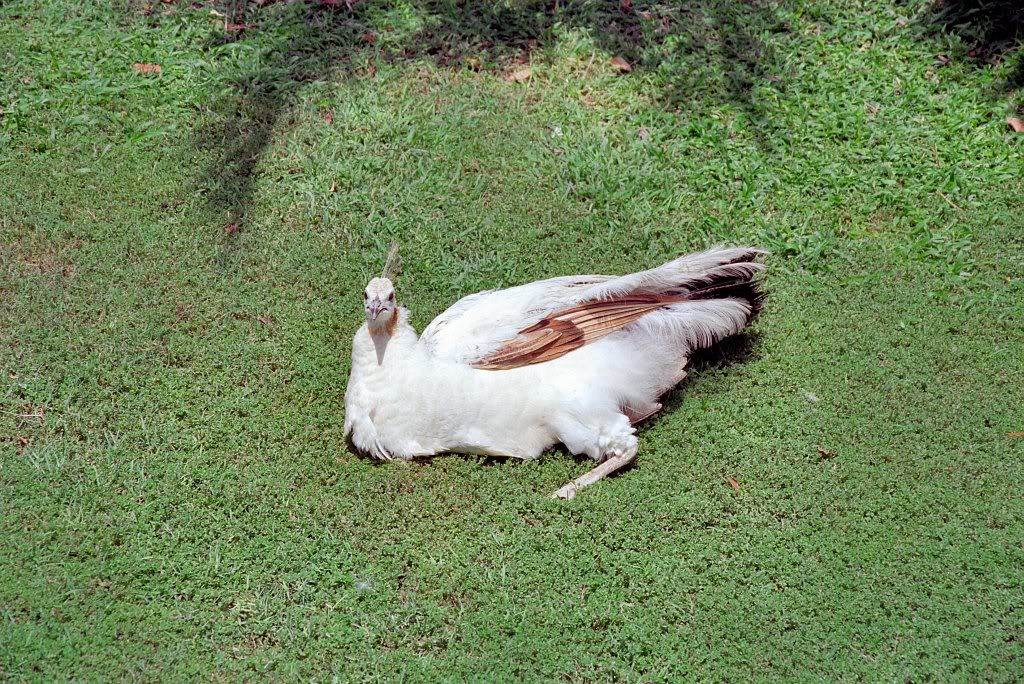
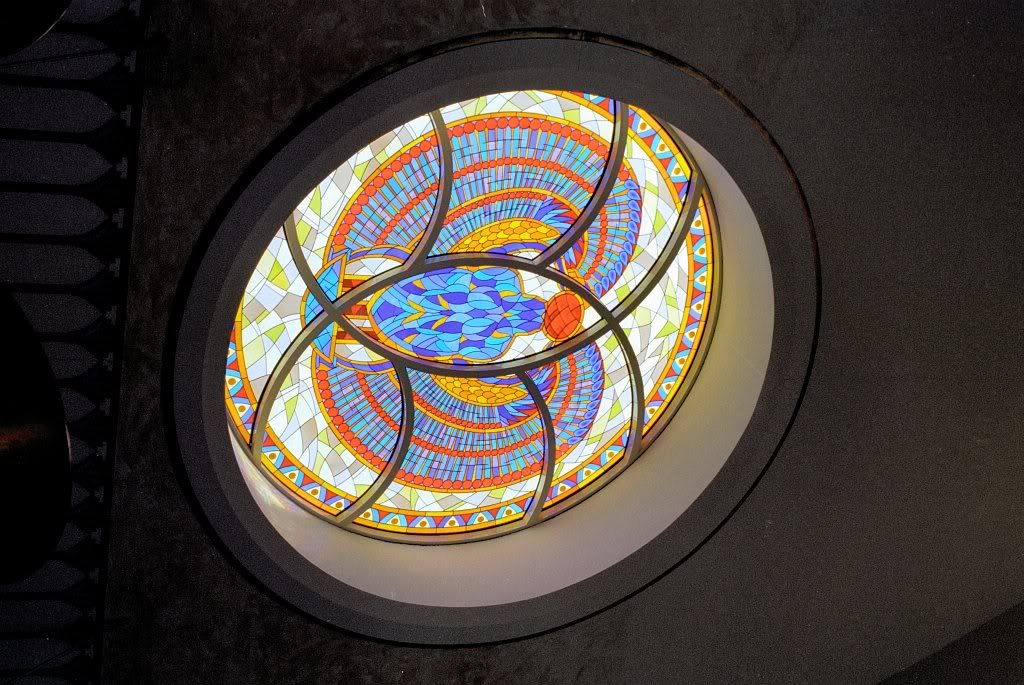

(Click to Enlarge)
Now, when you read here, have you become excited and finished downloading at least a few of them and have an intention to start some kinds of "inspection" and "comparison", or even did it already? If yes, then my big Congrats to you! You have the potential, tendency and pre-requisite to become a pixel peeper or even a measurbator ;-D (Just kidding, stay calm - "no offense intended"!)
So, which camera then? Just tell you and please don't tell other people even after you've known it: It's a ...
MZ-S! "Just"!!
Anyway, with my old trustworthy MZ-S, I could not and still cannot see gloomy pictures most of the time, no matter what films I used, including picky slides which have rather narrow exposure latitudes. And, the camera has always been so responsive in AF, night and day, and the shutter lag is less noticeable (than *any* Pentax DSLRs I have used). Moreover, the focus points achieved were usually very accurate, no matter what lens was used and under different light sources and lighting conditions. The TTL flash is far more accurate, too! (It's not the P-TTL anyway - I used the built-in flash for that dark environment picture). Pictures grainy? Yes, but those were scanned from negative films with an entry level historical (dead) Minolta film scanner anyway..
Wednesday, January 23, 2008
K20D Specifications Leaked
Right before the widely rumoured embargo removal date of January 24, the Russian Pentax distributor has already published the "official" specifications of the K20D in their website, linked below:-
http://www.pentar.ru/catalog/product/qm-productId-eq-1255315861415769-am-page-eq-tech.htm
So, despite all the hypes, unsubstantiated imaginations or even hoaxes which have been floating around on the net in recent one to two months, the K20D is just essentially a K10D with a new Samsung (14.6M) sensor with LiveView capability, which is indeed rather disappointed afterall. Unless the specs still don't tell us the "secret weapons" (if any), we get no new stuff and enhancement at all in this "new" body, say:-
1. AF system is the same, i.e., SAFOX VIII, which is outdated and inferior in speed, low light sensitivity, accuracy and continuous tracking performance etc.;
2. Multi-segment metering is yet the dinosaur age old film *ist SLR type and design, which is again the most unsophisticated, low IQ and inaccurate metering in the DSLR field, amongst all other DSLR systems;
3. RAW is still 12-bit;
4. Continuous shooting rate and buffer size is the same, i.e., 3 frames per second and up to 9 RAW files maximum in a stream. The image size is now increased, though;
5. LCD monitor is of low resolution at 230k pixels (counting all R, G and B ones?) and of a small size less than 3" (just 2.7" - not much bigger than the 2.5" mon which the Pentax *ist DL had a few years ago, which was the biggest at its time). I just wish to ask: how difficult to include an at least 3" LCD monitor? Well, unless this LCD is twistable and rotatable, it just doesn't make any sense at all.
So, does the almost standard DSLR feature of LiveView but the ever highest pixel count packed in a rather small APS-C sensor can make a miracle to save Pentax and Samsung or even help them to get more market share? Probably Nope if you ask me! Frankly, who cares about the extra pixel count if all other more important and most basic features plus camera performance aspects are falling behind? (I have been hoping Pentax could improve but I'm afraid many of us will be disappointed again! Very likely..)
BTW, all the above are indeed under expectation since the feature list of the Samsung GX-20 was leaked a few days ago. I just wish to repeat that unless there are still some "secret weapons" which have not been mentioned yet (possibly no more major stuff anyway - as they should be there in the specs if any), the K20D is really a huge disappointment to many of us. Anyway, we should know within 24 hours if the embargo removal date is true, and if an announcement will be made first in Japan or in the Pacific region.
Lastly, for existing newer Pentax DSLR users, who will actually be much willing to invest in such an "upgrade" if the specs are true and for such a "new" body, especially for the current K body owners? In the Pentax land, WHEN shall we be able to see and get a true upper-market DSLR with more updated and advanced features and most importantly, better camera reliability and performance which the DSLR market leaders, namely Canon and Nikon, have?? Why CAN'T Pentax upkeep their DSLRs with a more updated design particularly for the designs of AE and AF systems used in their DSLRs??? Putting aside their limited capabilities and resources in R&D, a trivial reason comes to my mind immediately, as usual and again, is: "They simply don't listen"!
With the lack of true determination which I could never see with Pentax (and now Hoya), again the K20D yet again just look like another primitive entry level DSLR model in the market. Sad.
Update (January 24): As we all know, Pentax have made the official announcement for the K20D and the K200D today. Despite that there have been a lot of false information, imaginations, untrue rumours or even hoaxes out there during the months about the cameras, I have been able to successfully filter out all these junks and reported only the correct information about the two new bodies, here. :-)
But then it should be noted that Canon have also announced the EOS 450D/XSi today, which just have all the new features which I wished (and imagined) to see with the K20D or the K200D (but neither both have most of these newly offered updated features and enhancements of the 450D):-
http://www.dpreview.com/news/0801/08012403canoneos450d.asp
So, how are the K20D and the K200D compared to the cheaply priced "entry level" Canon 450D actually? Here are some of the listed new features of the 450D (and how the more expensive K20D and similar priced K200D compares):-
Now, the last hope relies on the final Image Quality of the cameras, let's wait and see until the true test reports can see the light and we can see and compare more samples from all the new DSLRs (brand regardless). Yet very fortunately, the initial sample of the K20D shows to be quite good in terms of noise levels and the amount of retained image details, IMO, even at ISO 3200, according to the PopPhoto's initial trial. So, just go there to look yourself! But do also note from the test that the White Balance of the K20D has been found to be not so faithful and accurate as the PopPhoto testers needed to "warm up the pics" for a number of the limited test samples already. Anyway, time will tell and the true end-users will report and tell (not just the brand fanboys!). I shall keep on reporting those user reports later on when they appear.
http://www.pentar.ru/catalog/product/qm-productId-eq-1255315861415769-am-page-eq-tech.htm
So, despite all the hypes, unsubstantiated imaginations or even hoaxes which have been floating around on the net in recent one to two months, the K20D is just essentially a K10D with a new Samsung (14.6M) sensor with LiveView capability, which is indeed rather disappointed afterall. Unless the specs still don't tell us the "secret weapons" (if any), we get no new stuff and enhancement at all in this "new" body, say:-
1. AF system is the same, i.e., SAFOX VIII, which is outdated and inferior in speed, low light sensitivity, accuracy and continuous tracking performance etc.;
2. Multi-segment metering is yet the dinosaur age old film *ist SLR type and design, which is again the most unsophisticated, low IQ and inaccurate metering in the DSLR field, amongst all other DSLR systems;
3. RAW is still 12-bit;
4. Continuous shooting rate and buffer size is the same, i.e., 3 frames per second and up to 9 RAW files maximum in a stream. The image size is now increased, though;
5. LCD monitor is of low resolution at 230k pixels (counting all R, G and B ones?) and of a small size less than 3" (just 2.7" - not much bigger than the 2.5" mon which the Pentax *ist DL had a few years ago, which was the biggest at its time). I just wish to ask: how difficult to include an at least 3" LCD monitor? Well, unless this LCD is twistable and rotatable, it just doesn't make any sense at all.
So, does the almost standard DSLR feature of LiveView but the ever highest pixel count packed in a rather small APS-C sensor can make a miracle to save Pentax and Samsung or even help them to get more market share? Probably Nope if you ask me! Frankly, who cares about the extra pixel count if all other more important and most basic features plus camera performance aspects are falling behind? (I have been hoping Pentax could improve but I'm afraid many of us will be disappointed again! Very likely..)
BTW, all the above are indeed under expectation since the feature list of the Samsung GX-20 was leaked a few days ago. I just wish to repeat that unless there are still some "secret weapons" which have not been mentioned yet (possibly no more major stuff anyway - as they should be there in the specs if any), the K20D is really a huge disappointment to many of us. Anyway, we should know within 24 hours if the embargo removal date is true, and if an announcement will be made first in Japan or in the Pacific region.
Lastly, for existing newer Pentax DSLR users, who will actually be much willing to invest in such an "upgrade" if the specs are true and for such a "new" body, especially for the current K body owners? In the Pentax land, WHEN shall we be able to see and get a true upper-market DSLR with more updated and advanced features and most importantly, better camera reliability and performance which the DSLR market leaders, namely Canon and Nikon, have?? Why CAN'T Pentax upkeep their DSLRs with a more updated design particularly for the designs of AE and AF systems used in their DSLRs??? Putting aside their limited capabilities and resources in R&D, a trivial reason comes to my mind immediately, as usual and again, is: "They simply don't listen"!
With the lack of true determination which I could never see with Pentax (and now Hoya), again the K20D yet again just look like another primitive entry level DSLR model in the market. Sad.
Update (January 24): As we all know, Pentax have made the official announcement for the K20D and the K200D today. Despite that there have been a lot of false information, imaginations, untrue rumours or even hoaxes out there during the months about the cameras, I have been able to successfully filter out all these junks and reported only the correct information about the two new bodies, here. :-)
But then it should be noted that Canon have also announced the EOS 450D/XSi today, which just have all the new features which I wished (and imagined) to see with the K20D or the K200D (but neither both have most of these newly offered updated features and enhancements of the 450D):-
http://www.dpreview.com/news/0801/08012403canoneos450d.asp
So, how are the K20D and the K200D compared to the cheaply priced "entry level" Canon 450D actually? Here are some of the listed new features of the 450D (and how the more expensive K20D and similar priced K200D compares):-
The EOS 450D features:
- 12.2 Megapixel CMOS sensor (K200D has less pixels whilst the K20D has more)
- Canon’s EOS Integrated Cleaning System (It is an ultrasonic one which has been proven to be more effective whilst the Pentax or the Sony's "shaking off the dust by the sensor" itself is just a joke! The new Pentax software alert function is another big joke. How are the users be able to do in the *field* when the dust particles are detected??)
- 3.5 frames per second (faster than both K20D and the K200D as specified)
- 3.0” LCD with LiveView shooting (larger than both K20D and the K200D)
- "Quick AF" (flip the mirror up, thus quit LiveView temporarily, and do the AF) and "Live AF" (CMOS image contrast detection AF) in the LiveView mode (only the former method is available for the K20D plus it is yet problematic to use)
- 9-point wide-area AF system with f/2.8 cross-type centre point (Pentax have never produced any DSLR which is optimised for faster lenses for better focusing accuracy! Sad.)
- Picture Style image processing parameters (Yes, now that both K20D and K200D have that, but it's just a setting profile set.)
- DIGIC III image processor (Well, here is the Name of "PRIME")
- 14-bit per colour RAW (Both K20D and K200D stay at the 12-bit level)
- Digital Photo Professional RAW processing software (Now, we have the Photo Lab 3.5)
- Compact and Lightweight body (the K20D is heavy and bulky obviously but the K200D is still considerably larger and heavier than the 450D)
- Fully compatible with all Canon EF and EF-S lenses and EX-series Speedlites (No true compatibility with traditional K-mount lenses nor there are more choices to choose P-TTL compatible flashes which are rare)
Now, the last hope relies on the final Image Quality of the cameras, let's wait and see until the true test reports can see the light and we can see and compare more samples from all the new DSLRs (brand regardless). Yet very fortunately, the initial sample of the K20D shows to be quite good in terms of noise levels and the amount of retained image details, IMO, even at ISO 3200, according to the PopPhoto's initial trial. So, just go there to look yourself! But do also note from the test that the White Balance of the K20D has been found to be not so faithful and accurate as the PopPhoto testers needed to "warm up the pics" for a number of the limited test samples already. Anyway, time will tell and the true end-users will report and tell (not just the brand fanboys!). I shall keep on reporting those user reports later on when they appear.
Thursday, January 10, 2008
Samsung GX-20 Information Leaked
Yesterday, the GX-20 has been surfaced in the Internet with its information leaked at two Norwegian websites where brief specifications of the new body with a photo of it have been published:-
http://www.aronsen.no/default.asp?ArtID=428
http://www.akam.no/artikler/samsung_gx-20/47186
However, at the time when I am writing this blog article, all the above once published GX-20 information have already been removed, at both sites. Still, you can have a look on the appearance of the GX-20 at the PentaxLife Blog as follows:-
http://pentaxlife.com/samsung-gx20-unveiled
Well, since these have been removed so fast, this makes me believe more that these are really true information which have been leaked.
So, what are new then?
- 14.6MP CMOS Sensor (APS-C? Very likely, I bet);
- ISO Sensitivity up to 3200;
- Double Dust Removal System (Useless sensor shaking and What New Measure? By Software?);
- 2.7" LCD Monitor (No resolution is mentioned, so most likely to be typical low resolution one, probably something around 210,000 to 230,000 in QVGA quality);
- LiveView Function.
As for old features, it keeps the weather sealing and the SR (Shake Reduction) system (and of course).
So, this body is actually not much stronger than the GX-10 / K10D which it replaces by judging from the above features listed. In contrast, the really high (highest ever actually) pixel count, which is nearly 50% more than the K10D, packed in a small APS-C (very possibly) sized sensor is something that really worrisome for higher ISO noise performance. Nonetheless, since the highest ISO speed which is now available is ISO 3200, it is still possible that the noise control of the GX-20 / K20D has been vastly improved, or it is just that the user will yet get either very noisy pictures there or with cleaner pictures at the expense of losing image details after noise reduction is applied. Otherwise, if the latter cases won't happen, then Pentax/Samsung have created a miracle which is ground breaking when they can overcome the technology barrier or even breaking the law of Physics for being the first one who could do that! Just imagine!
As for the 2.7" LCD, my wishful thinking is that it is a swivel and twistable one, otherwise, with the size of the GX-10 / K10D (assuming that the GX-20 / K20D is similar in size), there should be sufficient room at the camera back to accommodate a 3" LCD which can be a VGA resolution one then, which is much better indeed. Despite that now on the market all VGA resolution LCD monitors of DSLRs are of 3", I still imagine (again) this 2.7" LCD is a VGA one, although it is unlikely. :-)
http://www.aronsen.no/default.asp?ArtID=428
http://www.akam.no/artikler/samsung_gx-20/47186
However, at the time when I am writing this blog article, all the above once published GX-20 information have already been removed, at both sites. Still, you can have a look on the appearance of the GX-20 at the PentaxLife Blog as follows:-
http://pentaxlife.com/samsung-gx20-unveiled
Well, since these have been removed so fast, this makes me believe more that these are really true information which have been leaked.
So, what are new then?
- 14.6MP CMOS Sensor (APS-C? Very likely, I bet);
- ISO Sensitivity up to 3200;
- Double Dust Removal System (Useless sensor shaking and What New Measure? By Software?);
- 2.7" LCD Monitor (No resolution is mentioned, so most likely to be typical low resolution one, probably something around 210,000 to 230,000 in QVGA quality);
- LiveView Function.
As for old features, it keeps the weather sealing and the SR (Shake Reduction) system (and of course).
So, this body is actually not much stronger than the GX-10 / K10D which it replaces by judging from the above features listed. In contrast, the really high (highest ever actually) pixel count, which is nearly 50% more than the K10D, packed in a small APS-C (very possibly) sized sensor is something that really worrisome for higher ISO noise performance. Nonetheless, since the highest ISO speed which is now available is ISO 3200, it is still possible that the noise control of the GX-20 / K20D has been vastly improved, or it is just that the user will yet get either very noisy pictures there or with cleaner pictures at the expense of losing image details after noise reduction is applied. Otherwise, if the latter cases won't happen, then Pentax/Samsung have created a miracle which is ground breaking when they can overcome the technology barrier or even breaking the law of Physics for being the first one who could do that! Just imagine!
As for the 2.7" LCD, my wishful thinking is that it is a swivel and twistable one, otherwise, with the size of the GX-10 / K10D (assuming that the GX-20 / K20D is similar in size), there should be sufficient room at the camera back to accommodate a 3" LCD which can be a VGA resolution one then, which is much better indeed. Despite that now on the market all VGA resolution LCD monitors of DSLRs are of 3", I still imagine (again) this 2.7" LCD is a VGA one, although it is unlikely. :-)
Saturday, January 05, 2008
P-TTL Reliability
Since the first Pentax DSLR was created, there have been numerous unfavourable user reports floating around on the Net for the poor accuracy and inconsistency with the Pentax P-TTL flash system, particularly there are more adverse reports associated with the latest model AF-540FGZ flash unit then the older 360 one, which is something really worrisome. Well, below are a few of the recent reports amongst all those:-
P-TTL the P stands for Pathetic
P-TTL and Pentax Flashes - Pure Frustrations
540 let me down Christmas Day
A little disapointed...
Well, in fact I was one of the first Pentax DSLR users who posted about my unpleasant experience of the P-TTL years ago, with my fist *ist D (on which traditional Pentax TTL is almost perfect, in contrast). In fact, at that time, I had already found that the results with P-TTL were with poor accuracy and consistency and in fact it was really hard to predict for the results, too. At that time, after all these unfavourable results obtained during my practical shooting, I decided to carry out some measurbation tests to check for the case, finally:-
P-TTL Vs TTL: Is Newer Better?
With no surprise, my measurbation test yielded the same results and conclusion which are mostly agreed with my practical experiences, i.e., the P-TTL tends to underexpose but exposure results are inconsistent and unpredictable.
Nevertheless, the most funny thing which I can see (but have been happened repeatedly) is that some P-TTL fans always told others to "learn" how to use the P-TTL system. And, according to what they said and say, those who have found and/or reported problems *should* "try" to compensate (how?) and to adapt to (how? I just wish to ask again!) to the system, as it is designed! (But HOW? How it is designed?? Please tell me and all of us here! .. if you really know!) Well, these particular people could even know when the P-TTL will be fooled (but they pointed out many cases that the system will be fooled! Really funny!!) and actually I just wish to know afterall: Anyone except Pentax knows the logics of the "intelligent" (supposed to be) P-TTL system? If not, how could they know how to compensate for such an Artificial Intelligent advanced flash system but which is inaccurate.
Well, all in all, if the P-TTL system is fairly accurate, there would not have been so many complaint cases and more importantly, there will be no need to compensate randomly by chance by so many Pentax users just because irregularities do happen from time to time.
In fact, as you can see from the above and other posts, those people who have used those similar intelligent advanced flash systems of Nikon and/or Canon would mostly comment that the Pentax's P-TTL really sucked.
In fact, there have been different Pentax DSLR users found that (and verified again and again that) the Auto mode (which was using the 60s electronics and technology) of the Pentax P-TTL flash guns would put back things mostly right on track. But then this Auto mode has two annoying problems/limitations which could cause much inconvenience, for what it is designed:-
1. Everytime when the flash unit is turned on, the Auto mode needed to be re-selected;
2. With the Auto mode activated, the zoom head of the flash unit is fixed at widest (I believe that the Auto mode circuitry does not cater for the change in GN for its calculations when the lens (and thus the zoom head) is zoomed, nor there is any feedback/input of such data in the control logic as such).
Furthermore, for Auto mode for flash metering and exposure control, it is still not Thro-The-Lens (aka TTL) afterall and hence all the disadvantages of the Auto flash can be applied here.
Last but not least, in the Pentax land, the case has been made even worse just because there are so little choices and limited availability of P-TTL compatible flash units, no matter for original or 3rd party ones - and up till now, there is still NO Macro Ring Flash. Furthermore, for 3rd party P-TTL flash guns, compatibility cannot be well ensured as it is very proprietary, for example, there were just older P-TTL "compatible" Sigma units which are not compatible with the latest Pentax K DSLRs.
So, now that many people and I do believe that Pentax's P-TTL is the poorest flash system on Earth for DSLRs, what Pentax can do and should do to change the situation? There is actually always fast and direct solution, get the TTL mode back and re-include it in at least some Pentax DSLR models and let the user to choose and store in memory for what mode they prefer when the flash unit is started up, namely, P-TTL, TTL, A mode or even M mode.
To do it even better, Pentax should upgrade the Auto mode control logic so that it can communicate and receive feedback data from the camera for what focal length is currently selected.
Nevertheless, the ultimate solution to the problem is to debug and improve the P-TTL system, of which the poor intelligence and logics used is the primitive problem, frankly speaking. If Pentax is still to be insistent in supporting the P-TTL system alone as the only TTL flash mode in the foreseeable future (just like Nikon and Canon have done, anyway), they should put more R&D efforts so that to make the P-TTL to be an usable one, with acceptable reliability, my humble words..
P-TTL the P stands for Pathetic
P-TTL and Pentax Flashes - Pure Frustrations
540 let me down Christmas Day
A little disapointed...
Well, in fact I was one of the first Pentax DSLR users who posted about my unpleasant experience of the P-TTL years ago, with my fist *ist D (on which traditional Pentax TTL is almost perfect, in contrast). In fact, at that time, I had already found that the results with P-TTL were with poor accuracy and consistency and in fact it was really hard to predict for the results, too. At that time, after all these unfavourable results obtained during my practical shooting, I decided to carry out some measurbation tests to check for the case, finally:-
P-TTL Vs TTL: Is Newer Better?
With no surprise, my measurbation test yielded the same results and conclusion which are mostly agreed with my practical experiences, i.e., the P-TTL tends to underexpose but exposure results are inconsistent and unpredictable.
Nevertheless, the most funny thing which I can see (but have been happened repeatedly) is that some P-TTL fans always told others to "learn" how to use the P-TTL system. And, according to what they said and say, those who have found and/or reported problems *should* "try" to compensate (how?) and to adapt to (how? I just wish to ask again!) to the system, as it is designed! (But HOW? How it is designed?? Please tell me and all of us here! .. if you really know!) Well, these particular people could even know when the P-TTL will be fooled (but they pointed out many cases that the system will be fooled! Really funny!!) and actually I just wish to know afterall: Anyone except Pentax knows the logics of the "intelligent" (supposed to be) P-TTL system? If not, how could they know how to compensate for such an Artificial Intelligent advanced flash system but which is inaccurate.
Well, all in all, if the P-TTL system is fairly accurate, there would not have been so many complaint cases and more importantly, there will be no need to compensate randomly by chance by so many Pentax users just because irregularities do happen from time to time.
In fact, as you can see from the above and other posts, those people who have used those similar intelligent advanced flash systems of Nikon and/or Canon would mostly comment that the Pentax's P-TTL really sucked.
In fact, there have been different Pentax DSLR users found that (and verified again and again that) the Auto mode (which was using the 60s electronics and technology) of the Pentax P-TTL flash guns would put back things mostly right on track. But then this Auto mode has two annoying problems/limitations which could cause much inconvenience, for what it is designed:-
1. Everytime when the flash unit is turned on, the Auto mode needed to be re-selected;
2. With the Auto mode activated, the zoom head of the flash unit is fixed at widest (I believe that the Auto mode circuitry does not cater for the change in GN for its calculations when the lens (and thus the zoom head) is zoomed, nor there is any feedback/input of such data in the control logic as such).
Furthermore, for Auto mode for flash metering and exposure control, it is still not Thro-The-Lens (aka TTL) afterall and hence all the disadvantages of the Auto flash can be applied here.
Last but not least, in the Pentax land, the case has been made even worse just because there are so little choices and limited availability of P-TTL compatible flash units, no matter for original or 3rd party ones - and up till now, there is still NO Macro Ring Flash. Furthermore, for 3rd party P-TTL flash guns, compatibility cannot be well ensured as it is very proprietary, for example, there were just older P-TTL "compatible" Sigma units which are not compatible with the latest Pentax K DSLRs.
So, now that many people and I do believe that Pentax's P-TTL is the poorest flash system on Earth for DSLRs, what Pentax can do and should do to change the situation? There is actually always fast and direct solution, get the TTL mode back and re-include it in at least some Pentax DSLR models and let the user to choose and store in memory for what mode they prefer when the flash unit is started up, namely, P-TTL, TTL, A mode or even M mode.
To do it even better, Pentax should upgrade the Auto mode control logic so that it can communicate and receive feedback data from the camera for what focal length is currently selected.
Nevertheless, the ultimate solution to the problem is to debug and improve the P-TTL system, of which the poor intelligence and logics used is the primitive problem, frankly speaking. If Pentax is still to be insistent in supporting the P-TTL system alone as the only TTL flash mode in the foreseeable future (just like Nikon and Canon have done, anyway), they should put more R&D efforts so that to make the P-TTL to be an usable one, with acceptable reliability, my humble words..
Saturday, December 29, 2007
Japanese DSLR Sales Figures for One Year
Here comes the sales figures of DSLRs of different brands in the Japanese home market for the recent one year, starting from December 2006 to November 2007:-
http://bcnranking.jp/news/0712/071219_9357p3.html
(Report article is in Japanese, use BabelFish if needed)
Well, as we can see from latest November 2007 results, Pentax is currently the brand with the least popularity in the DSLR market, with a share below 5%, putting aside Panasonic which shares virtually no market (but then Pana has never been a real participant in the DSLR field anyway). And, a quick glance at the plotted chart reveals that Pentax has been following a constant down trend since December last year in 2006.
Now that in the Japanese DSLR market, the truth is that there are only two major players, and then Sony and Olympus follow, with market share somehow more than 5% whereas Pentax still comes in the last place (as usual, even for the global market) and now they simply could not secure the 5% market share line.
So, I'm afraid that last time I was totally correct to comment and predicted that the "update" of the K100D "Super" is just useless and helpless, and now that the facts have told that my prediction have come true. Nonetheless, the present outcome was indeed quite obvious and easy to be predicted from the very beginning, anyway.
In fact there are always some "good" (but actually these are all adversed factors) reasons for the low market share and Pentax's loss in the competition, as I have pointed out from time to time here and/or elsewhere, that is, the various weaknesses and issues (new or old ones which have been persistent) of the current different Pentax DSLR gear items and the significant incompleteness of the current Pentax lens system and etc.
So, my humble opinions for what Pentax could do and should do to change the current worse position are as follows, in order of priority:-
1. Launch an entry level 10MP DSLR to compete with Canon 400D and Nikon D40X so as to recruit new beginner user base who will be a huge customer base for their future products within the DSLR *system*. Well, now that they will have the new K200D very soon (but actually they should have done this half year ago and now the situation will not be like that);
2. Replace the K10D as soon as possible with a new model which has most of the widely reported and well-known K10D issues and limitations removed. This body probably is the widely rumoured K20D. I really hope Pentax could get rid of most of the weaknesses of the K10D in their new replacement model but not again making the mistake of marketing a seem-to-be very strong body as published on paper but actually performs below common standards in various ways in the field;
3. Supplement soonest the loopholes in the Pentax current lens lineup, especially at the tele side;
4. Launch a true pro grade, or at least high-end up-market, DSLR body within 2008;
5. Plan for the 135 Full Frame, for both later DSLR bodies and lenses. Otherwise, when Canon, Nikon and Sony all have the Full Frame DSLR system in the foreseeable future but at affordable prices, Pentax (and Olympus as well, but of course) will just seat there and wait to die;
In addition to the above, Pentax should improve their marketing (which are usually non-sense, IMHO) and their inferior customer "service" and "support" (virtually just a little bit better than none, MHO again).
All in all, in order to survive or even do it better, Pentax have a lot to do and it is indeed not easy but actually rather difficult. But I still hope they would do it and eventually can succeed. At least I think the upcoming K200D and K20D maybe a good start. I still imagine that these two new bodies have been vastly improved deep inside. Let's wait and see.
Finally, just bear in mind that Hoya may not have the long patience to see Pentax to do better in the camera field. If they fail after a certain pre-determined period, Hoya would simply quit the camera business to cut loss and to release the burden. For a large Amercian style corporation like the Hoya, this possibility is quite likely, frankly speaking.
http://bcnranking.jp/news/0712/071219_9357p3.html
(Report article is in Japanese, use BabelFish if needed)
Well, as we can see from latest November 2007 results, Pentax is currently the brand with the least popularity in the DSLR market, with a share below 5%, putting aside Panasonic which shares virtually no market (but then Pana has never been a real participant in the DSLR field anyway). And, a quick glance at the plotted chart reveals that Pentax has been following a constant down trend since December last year in 2006.
Now that in the Japanese DSLR market, the truth is that there are only two major players, and then Sony and Olympus follow, with market share somehow more than 5% whereas Pentax still comes in the last place (as usual, even for the global market) and now they simply could not secure the 5% market share line.
So, I'm afraid that last time I was totally correct to comment and predicted that the "update" of the K100D "Super" is just useless and helpless, and now that the facts have told that my prediction have come true. Nonetheless, the present outcome was indeed quite obvious and easy to be predicted from the very beginning, anyway.
In fact there are always some "good" (but actually these are all adversed factors) reasons for the low market share and Pentax's loss in the competition, as I have pointed out from time to time here and/or elsewhere, that is, the various weaknesses and issues (new or old ones which have been persistent) of the current different Pentax DSLR gear items and the significant incompleteness of the current Pentax lens system and etc.
So, my humble opinions for what Pentax could do and should do to change the current worse position are as follows, in order of priority:-
1. Launch an entry level 10MP DSLR to compete with Canon 400D and Nikon D40X so as to recruit new beginner user base who will be a huge customer base for their future products within the DSLR *system*. Well, now that they will have the new K200D very soon (but actually they should have done this half year ago and now the situation will not be like that);
2. Replace the K10D as soon as possible with a new model which has most of the widely reported and well-known K10D issues and limitations removed. This body probably is the widely rumoured K20D. I really hope Pentax could get rid of most of the weaknesses of the K10D in their new replacement model but not again making the mistake of marketing a seem-to-be very strong body as published on paper but actually performs below common standards in various ways in the field;
3. Supplement soonest the loopholes in the Pentax current lens lineup, especially at the tele side;
4. Launch a true pro grade, or at least high-end up-market, DSLR body within 2008;
5. Plan for the 135 Full Frame, for both later DSLR bodies and lenses. Otherwise, when Canon, Nikon and Sony all have the Full Frame DSLR system in the foreseeable future but at affordable prices, Pentax (and Olympus as well, but of course) will just seat there and wait to die;
In addition to the above, Pentax should improve their marketing (which are usually non-sense, IMHO) and their inferior customer "service" and "support" (virtually just a little bit better than none, MHO again).
All in all, in order to survive or even do it better, Pentax have a lot to do and it is indeed not easy but actually rather difficult. But I still hope they would do it and eventually can succeed. At least I think the upcoming K200D and K20D maybe a good start. I still imagine that these two new bodies have been vastly improved deep inside. Let's wait and see.
Finally, just bear in mind that Hoya may not have the long patience to see Pentax to do better in the camera field. If they fail after a certain pre-determined period, Hoya would simply quit the camera business to cut loss and to release the burden. For a large Amercian style corporation like the Hoya, this possibility is quite likely, frankly speaking.
K200D First Images Surfaced
The upcoming K200D images have first surfaced in the last 24 hours over the Internet, here are one of the posts which include some of those first images, which look like to be official ones:-
http://www.pentaxforums.com/forums/pentax-news-rumors/17163-k200d-first-images-surfaced.html


(Click the images above to enlarge and see the original images)
But then conspiracy theory by some people will let them think that those are fake images by Photoshop works or etc. However, there are more evidence these images are true, just see:-
http://forums.dpreview.com/forums/read.asp?forum=1036&message=26203874
(Click the images below to enlarge and see the original images)


So, what's new here? What are the new stuff and features? And what are the actual design and specifications? Well, below are the changes which I can observe:-
1. The traditional taller PENTAX logo, which was usually used in the printed catalogues in the 80s and 90s, has been used to print on the body. It seems that the logo is not carved but just silk-screen printed, too;
2. There is a new "Green Button" on the top panel near the shutter release button, for some kind of resetting function, like that in the K10D, which is called Hyper functions by Pentax;
3. A "RAW Button", which was first introduced in the K10D, is added;
4. Sv (Sensitivity Priority) mode is added;
5. Possibility of adding vertical (battery(?)) hand grip;
6. Anti-slipping rubber has been added at the right thumb holding position (that no entry level Pentax DSLR/SLR has ever had in the past);
7. It seems that the SD card door opening/closing mechanism has been changed.
However, the following are just the same as the K100D, very likely:-
1. Three inch (3") LCD monitor? Nope, I am afraid. The LCD monitor seems to be still 2.5" by viewing the layout and compared to the K100D;
2. Viewfinder is the same as the K100D, i.e., a Penta-mirror one with the same magnification, and with the same single layer of thin greenish coating too (and for the outside of the eyepiece only);
So, afterall, let's wait for the release of this camera and hope that it is much better deep inside and can upkeep with the other DSLRs of the competitors in terms of image quality, accuracy, speed and performance, etc. I expect it will be a 10MP model which is built on the K100D fundamental with enhancements and modifications.
http://www.pentaxforums.com/forums/pentax-news-rumors/17163-k200d-first-images-surfaced.html


(Click the images above to enlarge and see the original images)
But then conspiracy theory by some people will let them think that those are fake images by Photoshop works or etc. However, there are more evidence these images are true, just see:-
http://forums.dpreview.com/forums/read.asp?forum=1036&message=26203874
(Click the images below to enlarge and see the original images)


So, what's new here? What are the new stuff and features? And what are the actual design and specifications? Well, below are the changes which I can observe:-
1. The traditional taller PENTAX logo, which was usually used in the printed catalogues in the 80s and 90s, has been used to print on the body. It seems that the logo is not carved but just silk-screen printed, too;
2. There is a new "Green Button" on the top panel near the shutter release button, for some kind of resetting function, like that in the K10D, which is called Hyper functions by Pentax;
3. A "RAW Button", which was first introduced in the K10D, is added;
4. Sv (Sensitivity Priority) mode is added;
5. Possibility of adding vertical (battery(?)) hand grip;
6. Anti-slipping rubber has been added at the right thumb holding position (that no entry level Pentax DSLR/SLR has ever had in the past);
7. It seems that the SD card door opening/closing mechanism has been changed.
However, the following are just the same as the K100D, very likely:-
1. Three inch (3") LCD monitor? Nope, I am afraid. The LCD monitor seems to be still 2.5" by viewing the layout and compared to the K100D;
2. Viewfinder is the same as the K100D, i.e., a Penta-mirror one with the same magnification, and with the same single layer of thin greenish coating too (and for the outside of the eyepiece only);
So, afterall, let's wait for the release of this camera and hope that it is much better deep inside and can upkeep with the other DSLRs of the competitors in terms of image quality, accuracy, speed and performance, etc. I expect it will be a 10MP model which is built on the K100D fundamental with enhancements and modifications.
Sunday, November 25, 2007
RiceHigh's Pentax Blog - One Year
One year ago, I created my this blog. Over these 365 days, there are over 60,000 distinct visiting sessions to my blog site, which is somehow quite to my surprise, although it might be just a small or neglectible figure when compared to true large photo sites on the net.
Also to my own surprise, I have already written 75 articles so far, which have been read by many people over the world. In fact, I have spent quite some valuable time of my life in preparing and writing those articles of mine, and for responding to comments as posted in my blog as well as to the emails which I have received in asking my advice and seeking my opinions.
In fact, owing to the super busy nature of my life (my family, my works, my friends, my hobbies and so on - no difference from many others), I once have thought about to abort. However, for all the encouragements I have received during this year, including for those in the "comments" section and those via private emails, surprisingly more numerous in number, I think I shall continue my works whenever it is possible for me and I have the time. I think (although not dare to make a promise or commitment here) I shall continue to give advice and replies to those who send me emails and ask me their questions.
Nevertheless, there are some hostile responses from time to time at my blog with some people got it very personal as you can see from the posts, maybe by some particular persons more than different ones. Whilst I just opted to keep ignoring most of those but not deleting even one of them, I hope in the future those people can grow up and be more human in the future so that more sensible and peaceful discussions can be made.
There is a Chinese idiom saying that "The Truth can be found out through the course of Debating". I do firmly believe in this wisdom as it should always be true. Of course, I do also believe that my site is actually really useful and helpful not only to existing Pentax users and potential Pentax buyers, but also to Pentax, as the manufacturer themselves, as well, whom they should do similar tasks as I do, but in more systematic ways and should be more extensively.
Finally, now that it has been widely rumoured that the K10D and the K100D/Super will be replaced very soon as new replacement models will come / be announced in fall January 2008 next year. Let's wait and see what will happen and see if real improvements will come and how well Pentax/Hoya will do the job in getting rid of those various commonly reported problems and design weaknesses of their existing K cameras. So, my last words here are: Good Luck to Pentax and Good Luck to all of us, we Pentaxians!
Also to my own surprise, I have already written 75 articles so far, which have been read by many people over the world. In fact, I have spent quite some valuable time of my life in preparing and writing those articles of mine, and for responding to comments as posted in my blog as well as to the emails which I have received in asking my advice and seeking my opinions.
In fact, owing to the super busy nature of my life (my family, my works, my friends, my hobbies and so on - no difference from many others), I once have thought about to abort. However, for all the encouragements I have received during this year, including for those in the "comments" section and those via private emails, surprisingly more numerous in number, I think I shall continue my works whenever it is possible for me and I have the time. I think (although not dare to make a promise or commitment here) I shall continue to give advice and replies to those who send me emails and ask me their questions.
Nevertheless, there are some hostile responses from time to time at my blog with some people got it very personal as you can see from the posts, maybe by some particular persons more than different ones. Whilst I just opted to keep ignoring most of those but not deleting even one of them, I hope in the future those people can grow up and be more human in the future so that more sensible and peaceful discussions can be made.
There is a Chinese idiom saying that "The Truth can be found out through the course of Debating". I do firmly believe in this wisdom as it should always be true. Of course, I do also believe that my site is actually really useful and helpful not only to existing Pentax users and potential Pentax buyers, but also to Pentax, as the manufacturer themselves, as well, whom they should do similar tasks as I do, but in more systematic ways and should be more extensively.
Finally, now that it has been widely rumoured that the K10D and the K100D/Super will be replaced very soon as new replacement models will come / be announced in fall January 2008 next year. Let's wait and see what will happen and see if real improvements will come and how well Pentax/Hoya will do the job in getting rid of those various commonly reported problems and design weaknesses of their existing K cameras. So, my last words here are: Good Luck to Pentax and Good Luck to all of us, we Pentaxians!
Sunday, November 18, 2007
Pentax Admits The "Tilted Viewfinder" Problem, Finally.
Here is the latest announcement made by Pentax Trading (Shanghai) Ltd., at a large Chinese digital photography site as below:-
http://news.fengniao.com/71/715791.html
(The announcement is in Simplified Chinese, use Babelfish to translate if needed.)
The most important message contained in the announcement is that: "For those K10D users who have experienced the problem, Pentax will offer free checking and adjustment services, plus an extension of the warranty for another one year."
In fact, this offer has not come for no reason. It is actually the true value of the internet where the Chinese users have reported the same problem with various different real or test pictures posted and sharing of what Pentax at China has been responding for months, already, e.g., Pentax has been denying the problem and saying that the "errors are within tolerance" as usual and etc. Here is a recent example (with tilted pictures posted) and for the story the user experienced he shares:-
http://digi.tech.qq.com/a/20071101/000176.htm
(Again, the post is in Simplified Chinese, use Babelfish to translate if needed.)
Putting aside this problem which the users in the mainland China have been reporting, if one do a search at the DPR Pentax SLR forum, uncountable returns can be found, especially when the K10D was a new product. (By the way, I hope if you do the search, you are lucky enough for not getting the "Search is "temporarily" not available" error message again for what the search engine is often down! :-))
Nonetheless, below are just two more recent reports as posted by another two K10D users, at the PentaxForums.com:-
http://www.pentaxforums.com/forums/pentax-dslr-discussion/11857-leaning-viewfinder-k10d.html
http://www.pentaxforums.com/forums/pentax-dslr-discussion/4346-k10d-image-consistently-rotated.html
Well, my experiences and opinions on the case? What I found with my own *ist D, DS units and my K100D as well as the DL and the K10D which I have used is that penta-mirror Pentax DSLRs are more accurate in viewfinder's levelling alignment than those penta-prism Pentax DSLRs. Yet, it maybe a coincidence, but I did have owned and used at least 3 units of the *ist D and 3 units of the DS - no big difference actually and they all had some degrees of levelling errors than my current K100D does, which is perfect IMHO in that aspect. So, what are the possible technical reasons behind for the issue? There are at least three suspected ones below, which are quite possible:-
1. All penta-prism Pentax DSLRs, namely, the *ist D, DS and the K10D all have looser viewfinder framing which mean that the users can still move somehow for their eyesight within the black framing of the viewfinder image without cutting any part of the projected image significantly as seen. The penta-prism will cause more tilting in the projected images under such circumstance, for what I can see;
2. The second reason is quite related to the "loose viewfinder framing", which will again cause even more troubles where there is another culprit: It is the mis-alignment of the red focus indicator(s) which normally people tend to look in a way to see the red indicator as aligned symmetrically against the focusing bracket mark. But with the misalignment of the illuminated red indicator(s), as projected, *plus* a loose viewfinder framing, actually the user is NOT looking through the viewfinder correctly through the central optical axis of the viewfinder, optically, which will again cause a tilted image as recorded more easily, as a result.
3. The last reason is indeed trivial, and it should be the first one actually, if existent, that is, the viewfinder is simply misaligned, against the levelling position of the CCD or vice versa, i.e., the CCD has levelling problem, when it was installed!
Anyway, I yet again hope Pentax could improve their design, especially for their penta-prism DSLRs and I hope the next Pentax penta-prism DSLR should have a more tight framing border and Pentax should re-design a better way of the selected focus point indication, without shifting of the indication marks in different ways and patterns which can be quite different from body to body. Of course, it is always highly desirable for them to make better alignments and tighten the QC at their factory, too, as always I (and should be all Pentax customers) wish.
Update (Nov. 25): There is a very interesting quick but nice measurbation carried out by a K10D user who faced the tilted viewfinder problem and have got his unit adjusted by Pentax. His post is in fact self-explanatory and here it is:-
http://www.pentaxforums.com/forums/pentax-dslr-discussion/11857-leaning-viewfinder-k10d-6.html#post123499
http://news.fengniao.com/71/715791.html
(The announcement is in Simplified Chinese, use Babelfish to translate if needed.)
The most important message contained in the announcement is that: "For those K10D users who have experienced the problem, Pentax will offer free checking and adjustment services, plus an extension of the warranty for another one year."
In fact, this offer has not come for no reason. It is actually the true value of the internet where the Chinese users have reported the same problem with various different real or test pictures posted and sharing of what Pentax at China has been responding for months, already, e.g., Pentax has been denying the problem and saying that the "errors are within tolerance" as usual and etc. Here is a recent example (with tilted pictures posted) and for the story the user experienced he shares:-
http://digi.tech.qq.com/a/20071101/000176.htm
(Again, the post is in Simplified Chinese, use Babelfish to translate if needed.)
Putting aside this problem which the users in the mainland China have been reporting, if one do a search at the DPR Pentax SLR forum, uncountable returns can be found, especially when the K10D was a new product. (By the way, I hope if you do the search, you are lucky enough for not getting the "Search is "temporarily" not available" error message again for what the search engine is often down! :-))
Nonetheless, below are just two more recent reports as posted by another two K10D users, at the PentaxForums.com:-
http://www.pentaxforums.com/forums/pentax-dslr-discussion/11857-leaning-viewfinder-k10d.html
http://www.pentaxforums.com/forums/pentax-dslr-discussion/4346-k10d-image-consistently-rotated.html
Well, my experiences and opinions on the case? What I found with my own *ist D, DS units and my K100D as well as the DL and the K10D which I have used is that penta-mirror Pentax DSLRs are more accurate in viewfinder's levelling alignment than those penta-prism Pentax DSLRs. Yet, it maybe a coincidence, but I did have owned and used at least 3 units of the *ist D and 3 units of the DS - no big difference actually and they all had some degrees of levelling errors than my current K100D does, which is perfect IMHO in that aspect. So, what are the possible technical reasons behind for the issue? There are at least three suspected ones below, which are quite possible:-
1. All penta-prism Pentax DSLRs, namely, the *ist D, DS and the K10D all have looser viewfinder framing which mean that the users can still move somehow for their eyesight within the black framing of the viewfinder image without cutting any part of the projected image significantly as seen. The penta-prism will cause more tilting in the projected images under such circumstance, for what I can see;
2. The second reason is quite related to the "loose viewfinder framing", which will again cause even more troubles where there is another culprit: It is the mis-alignment of the red focus indicator(s) which normally people tend to look in a way to see the red indicator as aligned symmetrically against the focusing bracket mark. But with the misalignment of the illuminated red indicator(s), as projected, *plus* a loose viewfinder framing, actually the user is NOT looking through the viewfinder correctly through the central optical axis of the viewfinder, optically, which will again cause a tilted image as recorded more easily, as a result.
3. The last reason is indeed trivial, and it should be the first one actually, if existent, that is, the viewfinder is simply misaligned, against the levelling position of the CCD or vice versa, i.e., the CCD has levelling problem, when it was installed!
Anyway, I yet again hope Pentax could improve their design, especially for their penta-prism DSLRs and I hope the next Pentax penta-prism DSLR should have a more tight framing border and Pentax should re-design a better way of the selected focus point indication, without shifting of the indication marks in different ways and patterns which can be quite different from body to body. Of course, it is always highly desirable for them to make better alignments and tighten the QC at their factory, too, as always I (and should be all Pentax customers) wish.
Update (Nov. 25): There is a very interesting quick but nice measurbation carried out by a K10D user who faced the tilted viewfinder problem and have got his unit adjusted by Pentax. His post is in fact self-explanatory and here it is:-
http://www.pentaxforums.com/forums/pentax-dslr-discussion/11857-leaning-viewfinder-k10d-6.html#post123499
Subscribe to:
Posts (Atom)